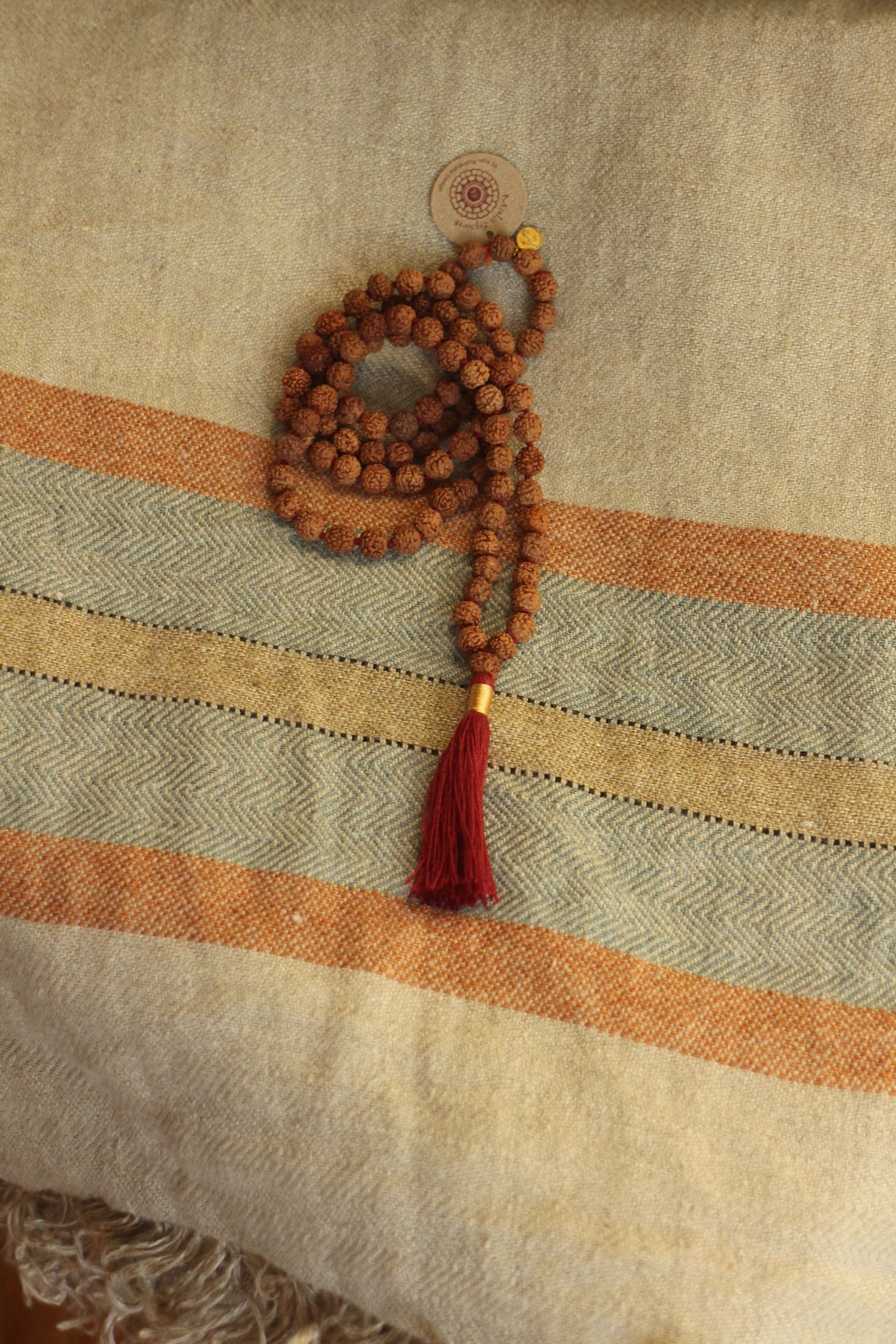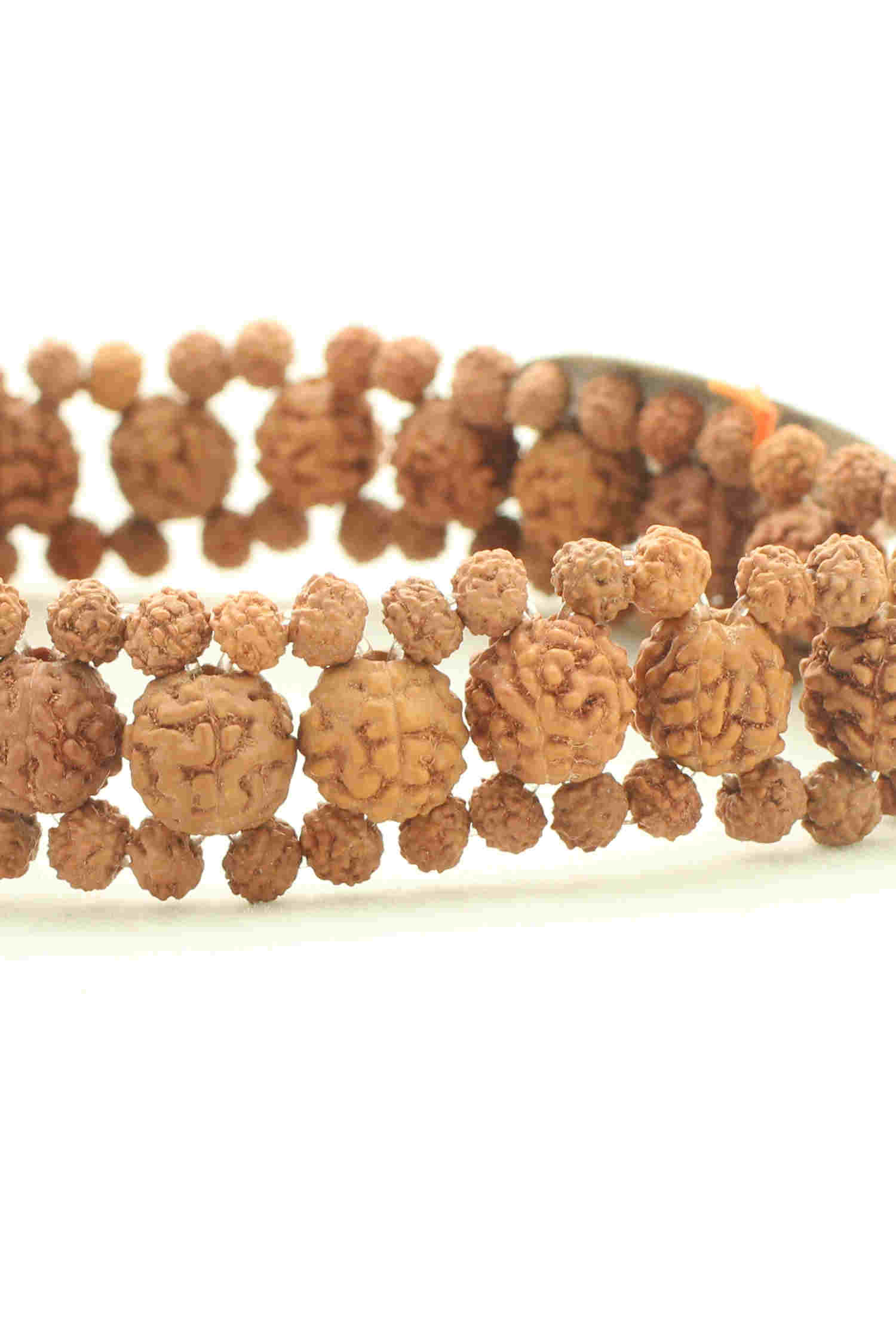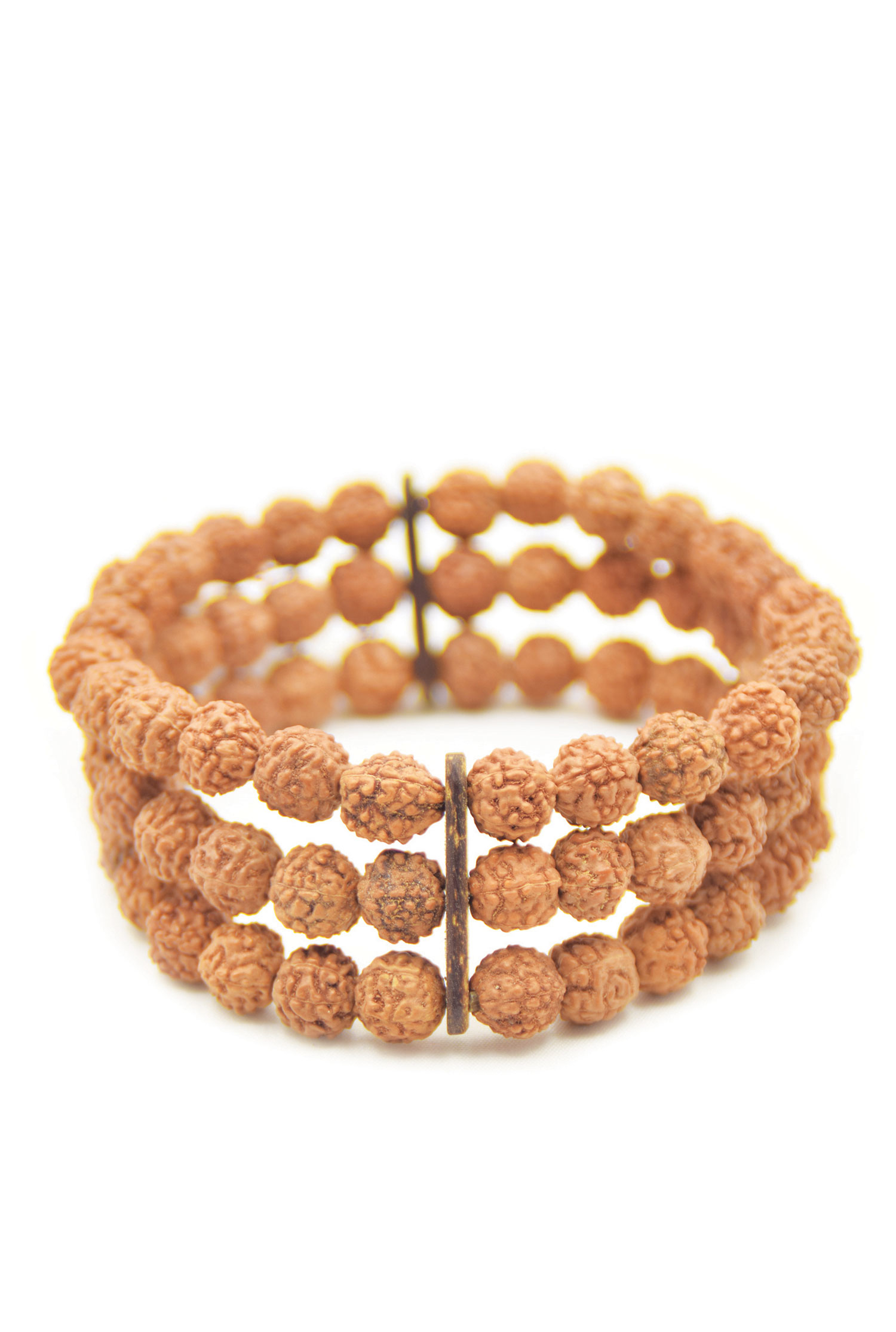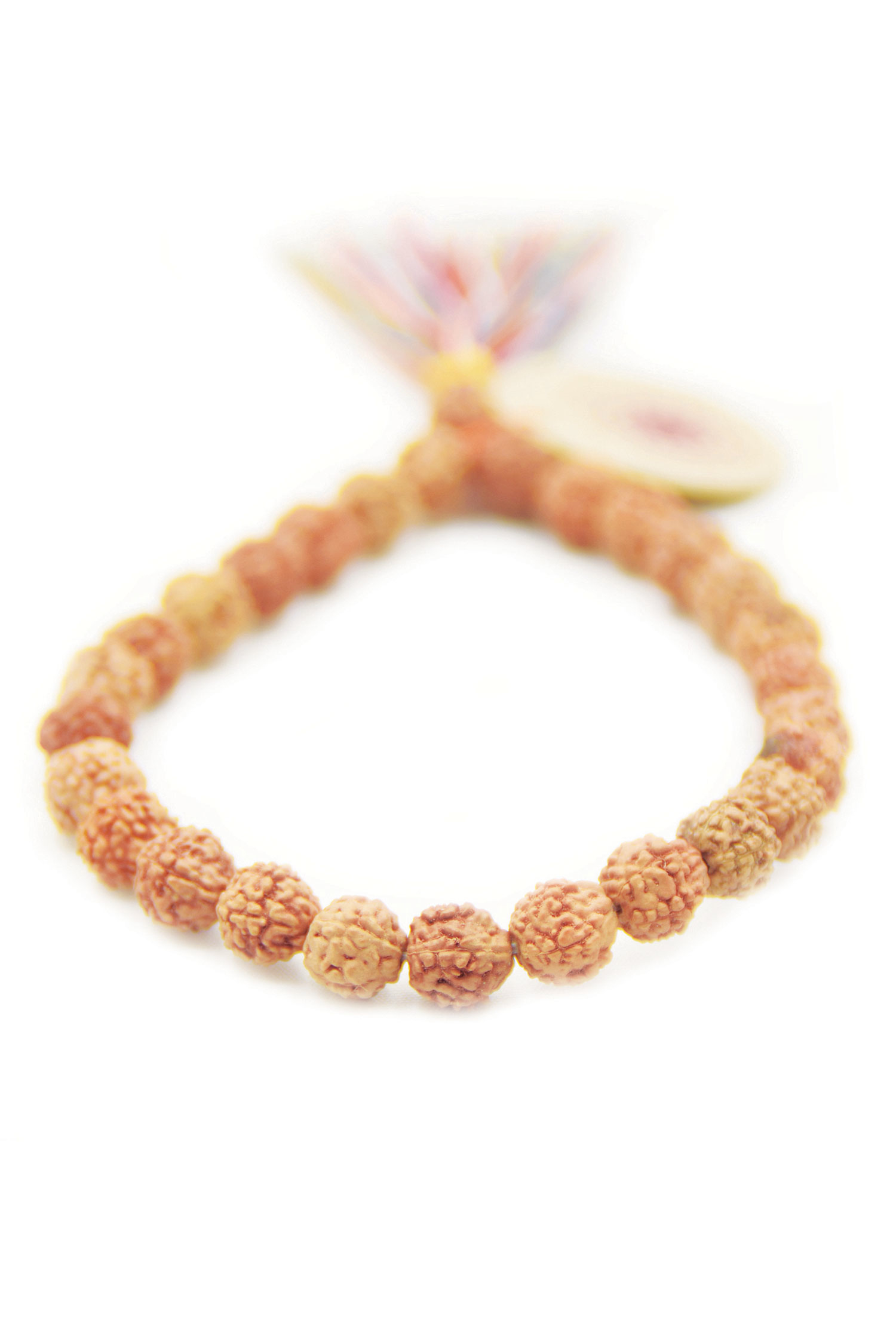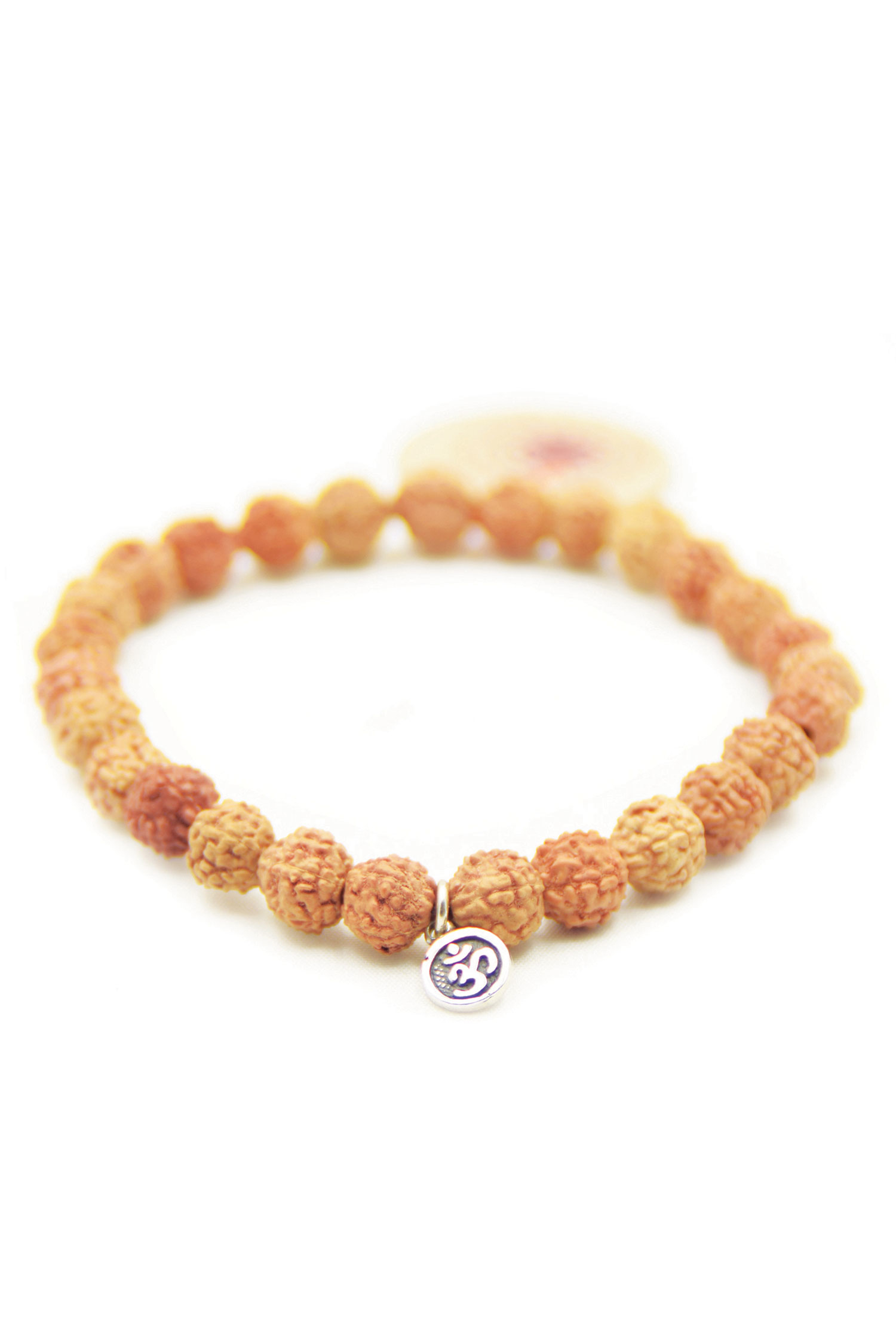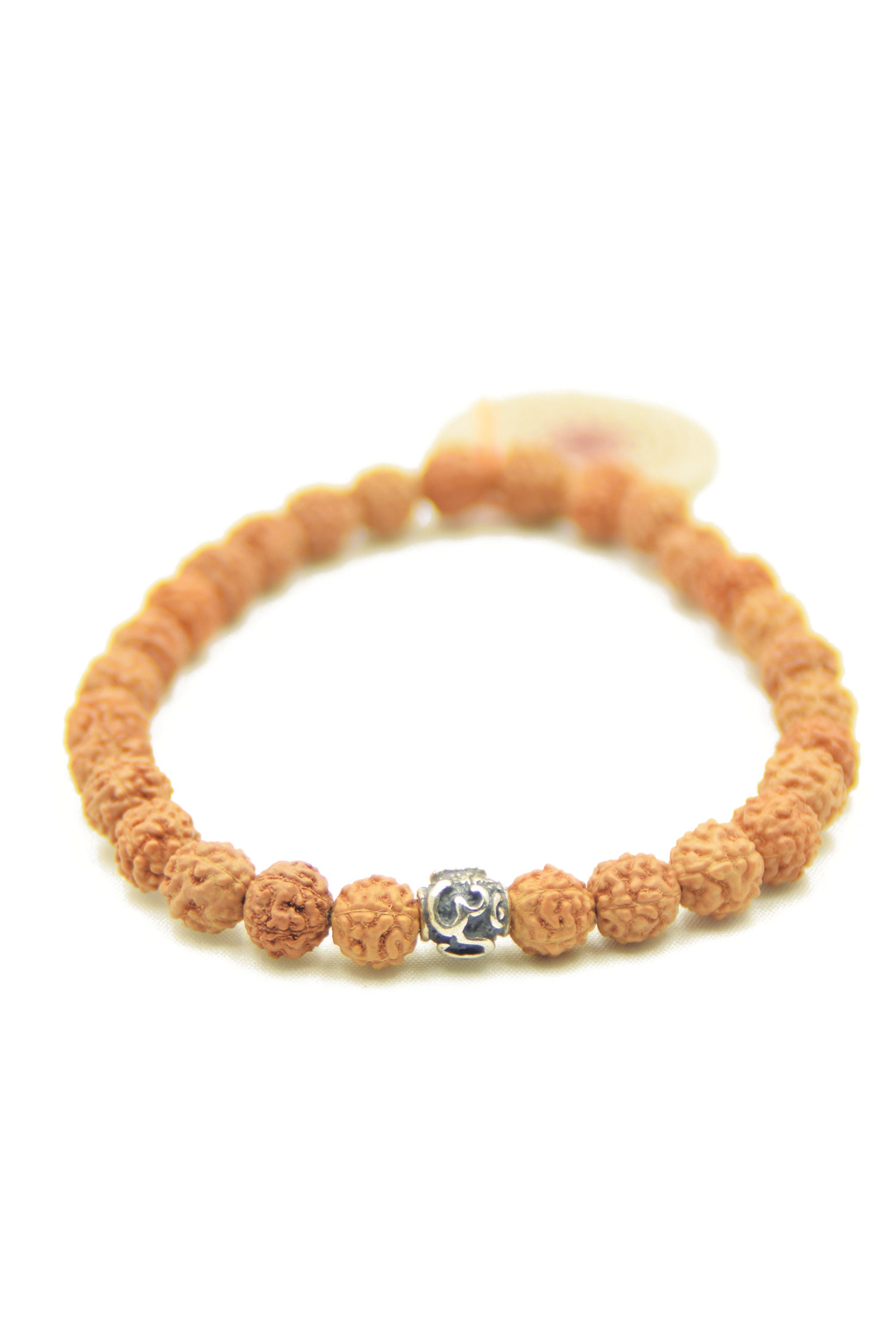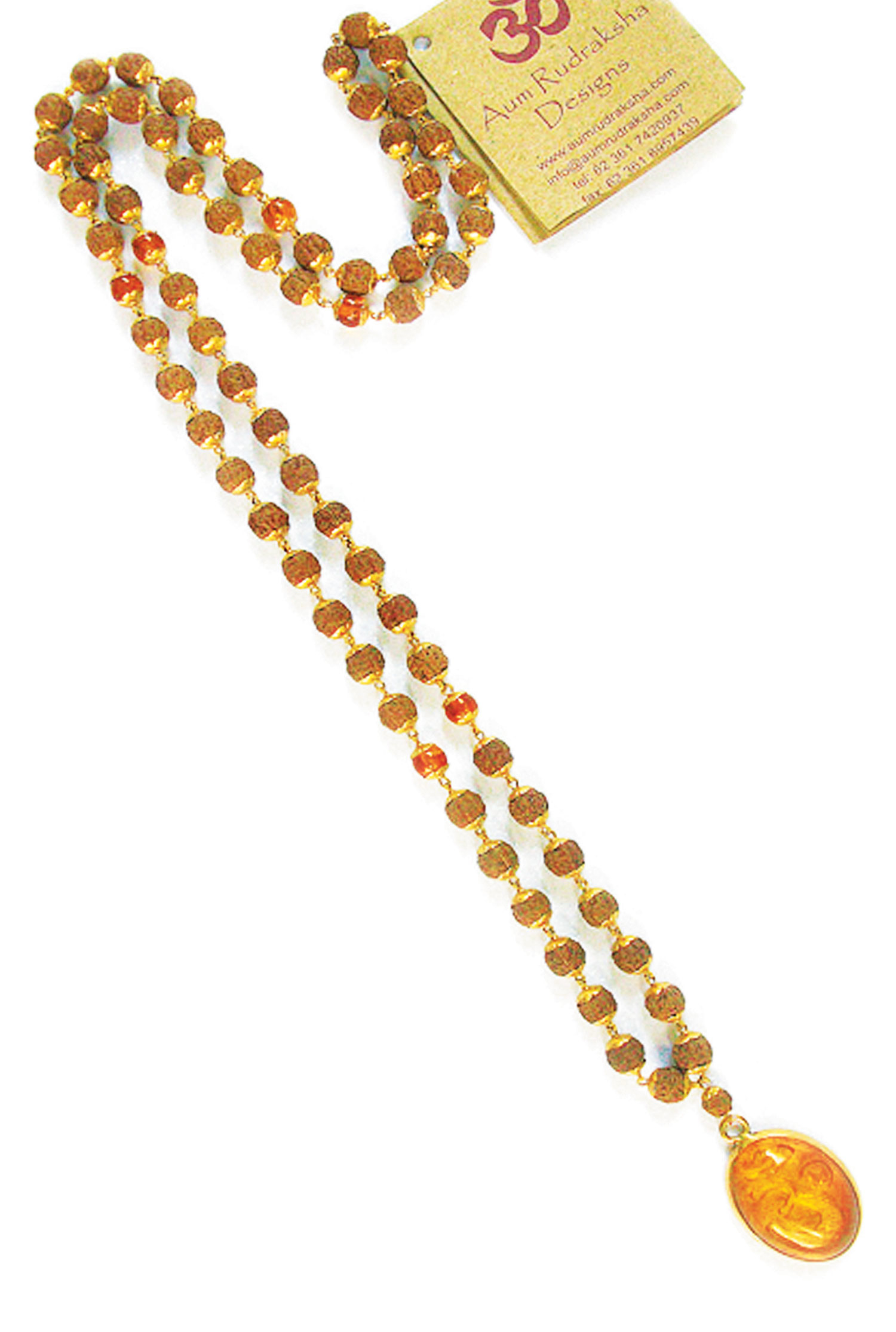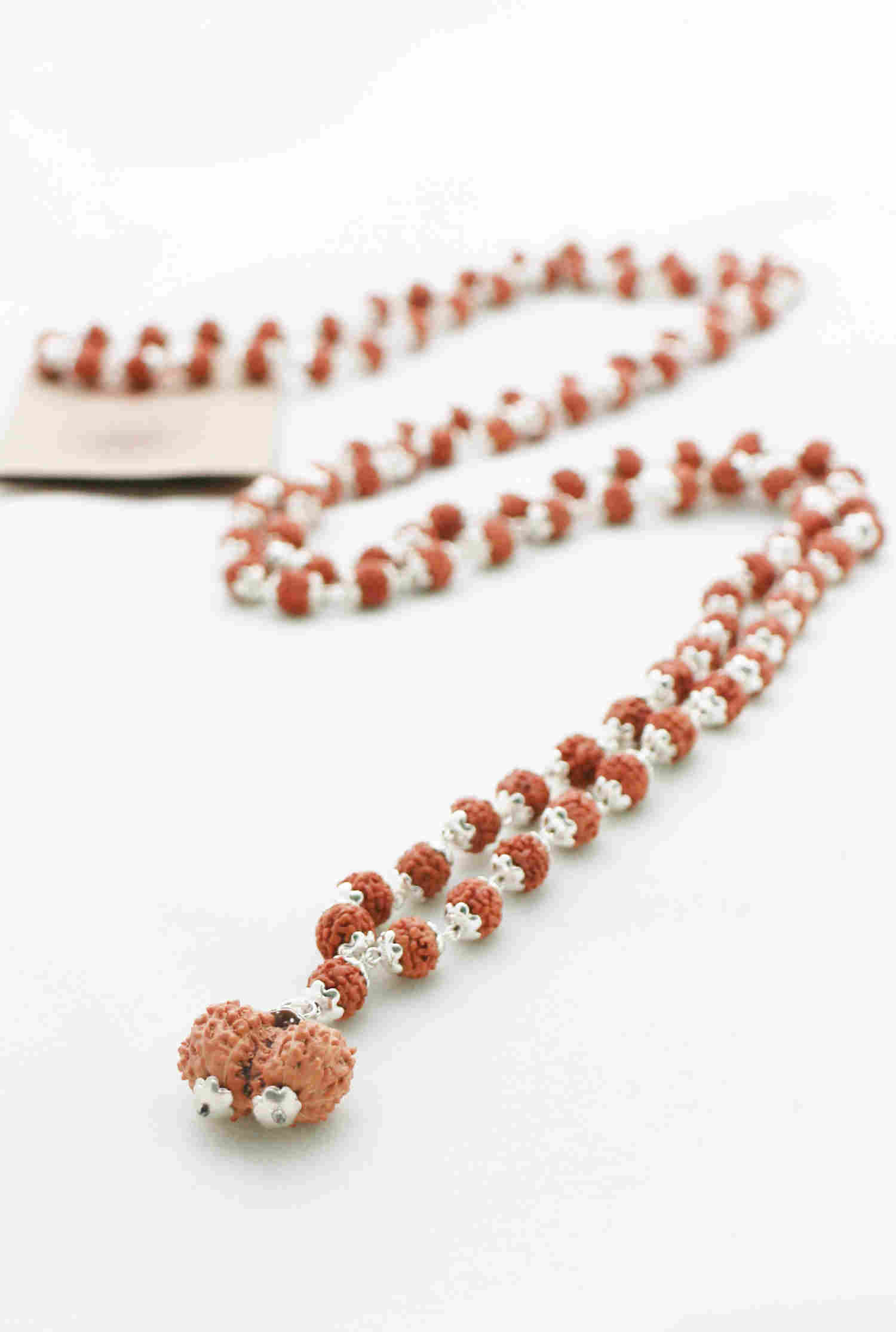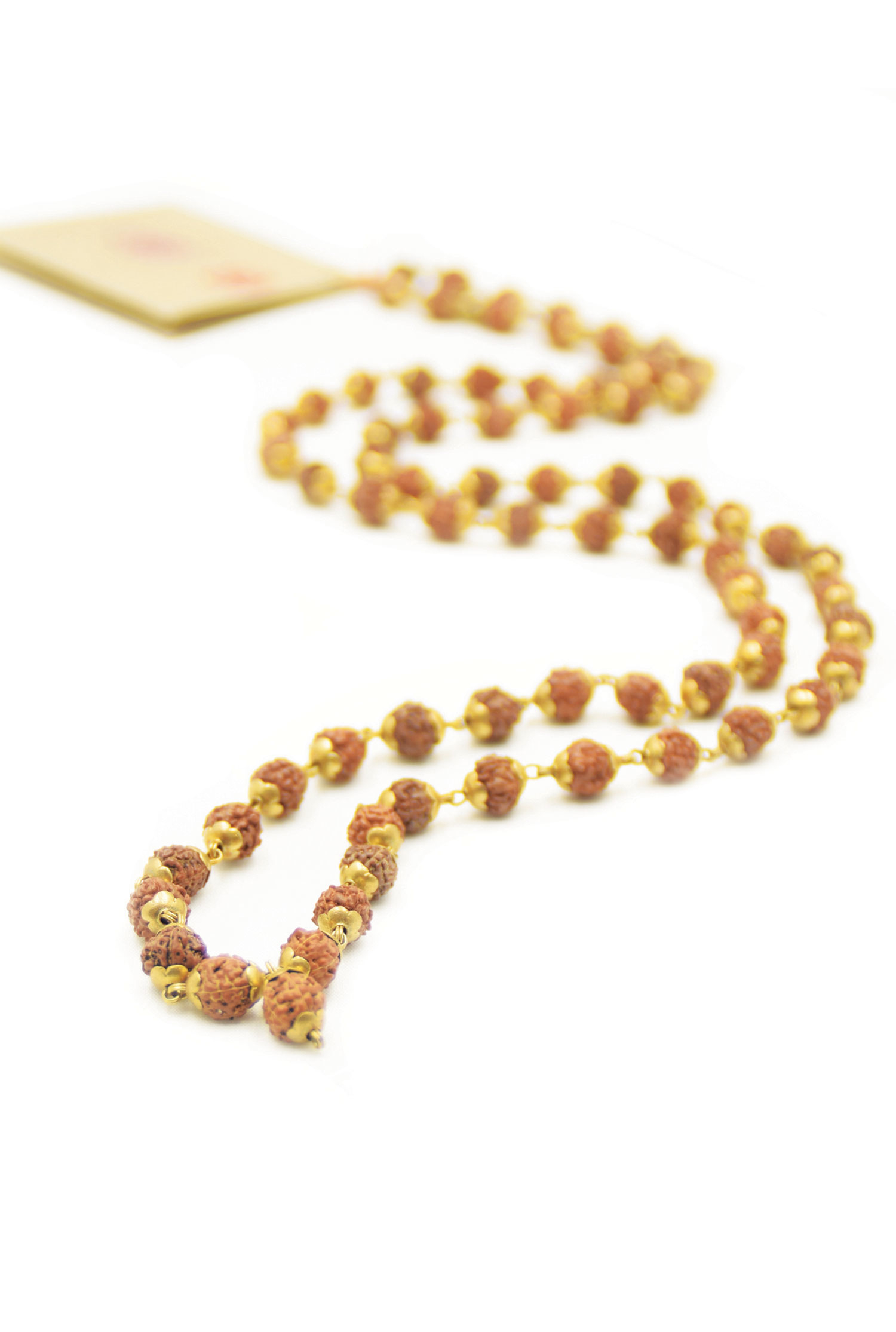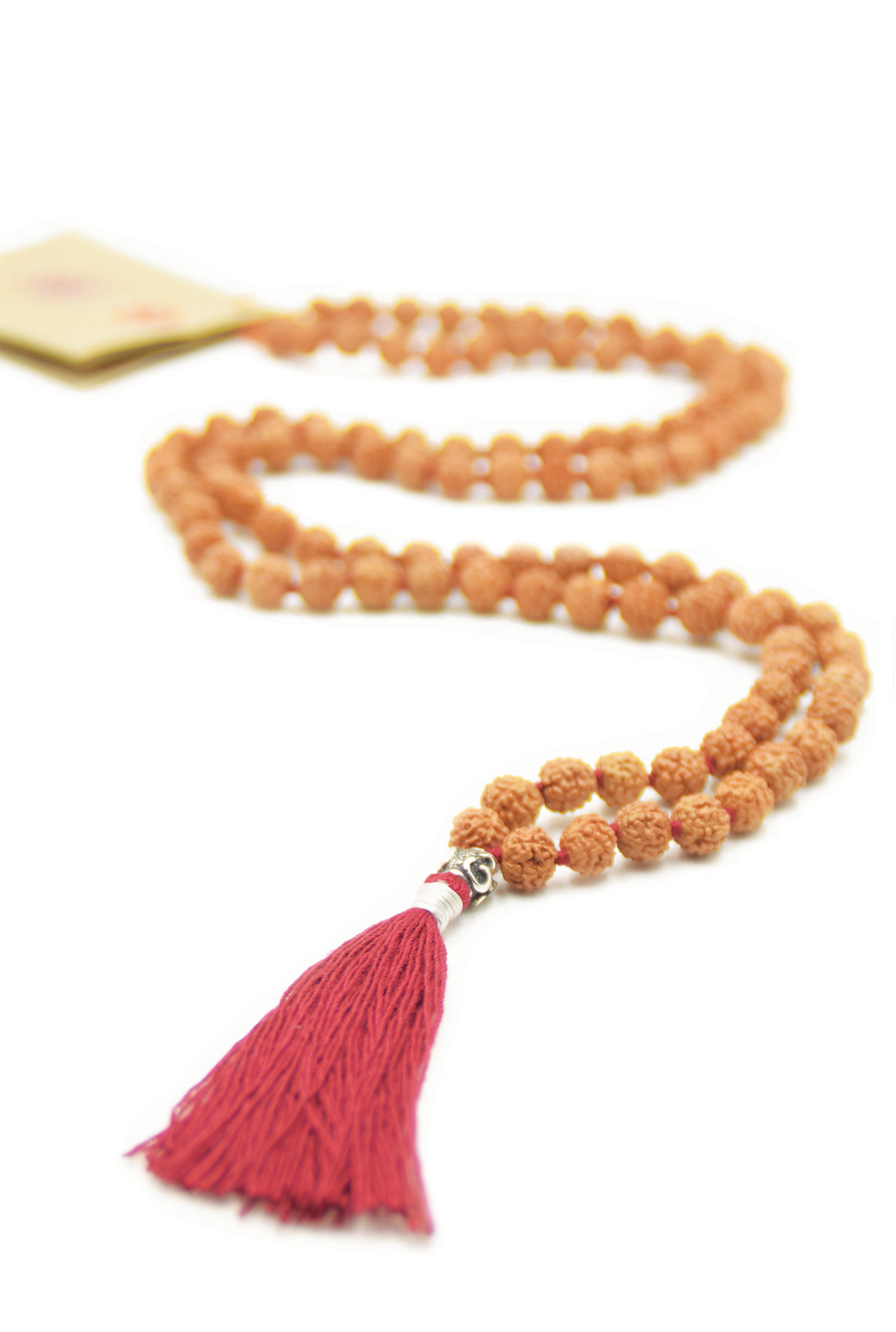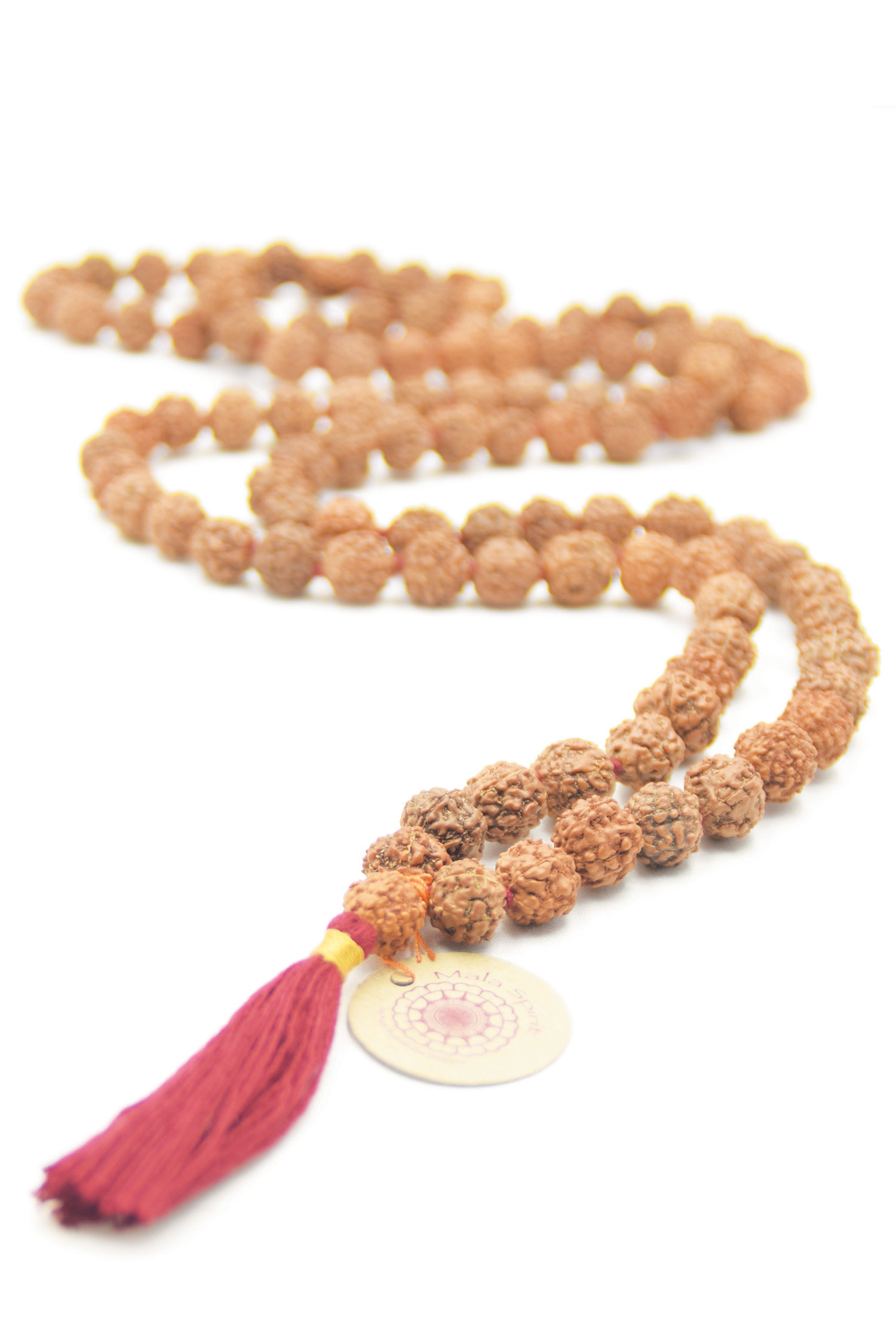
A mala that is used changes over time. The rudraksha darken from the oils of your skin and the knots soften. And beyond that, the mala becomes more and more your own.
Below you will find how to take care of a mala: how to consecrate a new one, how to cleanse it energetically, and how to store it when you are not wearing it. And what happens to your mala on Bali before it begins the journey to you.
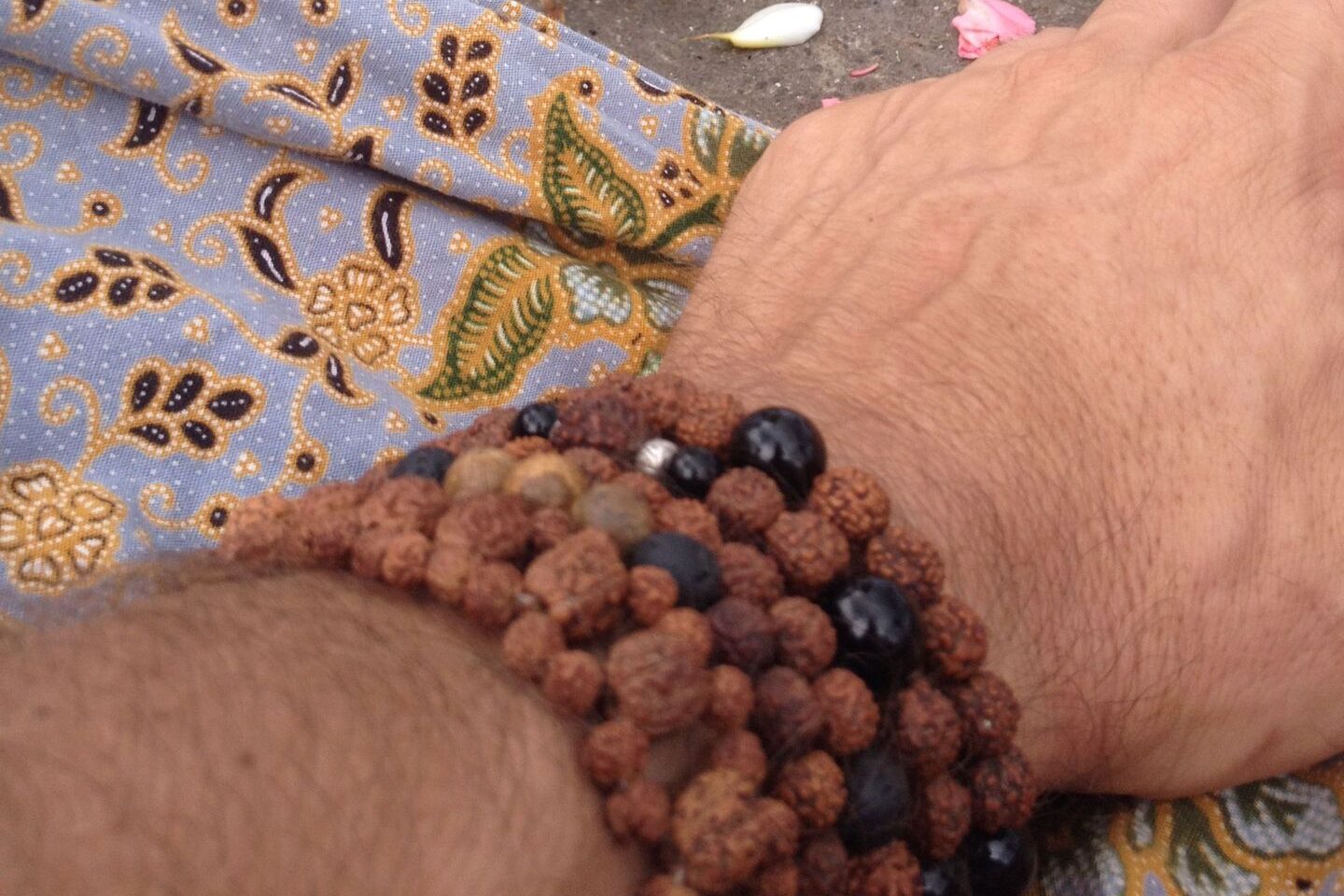
Consecrating a New Mala
You can wear your mala the moment it arrives. But you can also cleanse it first and then consecrate it. Doing so gives you a beautiful start together, and you will notice that the mala feels like your own straight away.
Awareness and respect are the key words. What follows is a suggestion and certainly not the only way to cleanse and charge a mala. It is my own interpretation of old books and articles I have read, combined with the many ceremonies I come across on my path in the present, and from the past.
Everything you read here about how to treat your mala may also be taken as an invitation to bring more attention to everything we do in our daily lives.
The Ceremony, Step by Step
- Begin on a Monday. Monday is the day of Shiva.
- Sit down in a quiet and peaceful place. Put some flowers in a bowl of water. Relax.
- Wash the beads, one by one. Once you feel relaxed, wash the beads with your right hand — not with your index finger — by letting a little water run over them, or sprinkle them. This is not a polish but an energetic cleansing: with loving attention, and with the intention of purifying the mala completely.
- Offer incense by lighting a stick.
- Offer a flower and lay it on a small dish.
- Say the mantra. OM HREEM NAMAH SHIVAYA OM. We say this mantra because the beads represent the tears of Shiva, which remind us of our true nature. Picture them protecting you, blessing you and bringing peace to your soul.
- Now you can wear your mala.
Please note: not all gemstones and semi-precious stones tolerate water well — moonstone, selenite, malachite, calcite, fluorite and opal are examples. Check this before you cleanse your mala. There is more on the stones in gemstones and their meaning.
Why This Mantra, and Not Om Namah Shivaya
Om Namah Shivaya is the mantra that suits every rudraksha and the one you can use in your daily practice. For cleansing and charging the beads, tradition uses the longer form, with Hreem in it — a sound associated with purification and with the divine mother.
The Blessing on Bali, Before Your Mala Leaves
Your ceremony is not the first your mala has known. On Bali its care began before the beads ever left the workshop.
Mebanten: The Daily Offering of Thanks
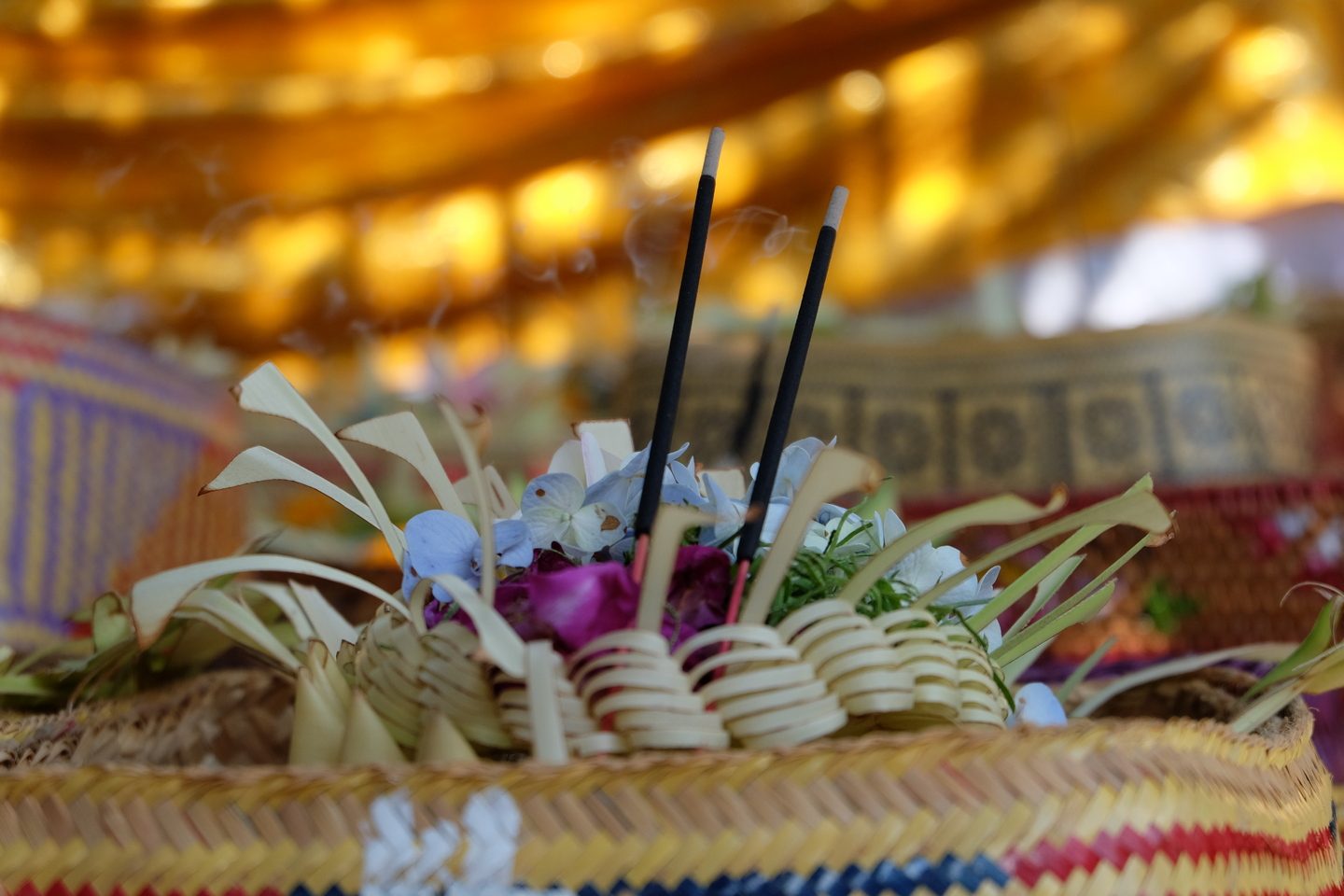
When the beads and the other parts of the malas arrive at the workshop, they are blessed with a Mebanten ritual. It is an everyday ritual in which offerings are placed to give thanks and to make a connection with the upper and the lower world.
This is done with small woven baskets filled with flowers, a coin, rice, salt and a burning stick of incense. Prayers are spoken as the offering is made.
Pasupati: The Consecration for the Journey
Before the malas leave the workshop on Bali and begin their journey to Europe, they are blessed with a Pasupati ritual. This is a rite of consecration and ensoulment, meant to purify inanimate objects and endow them with spiritual, divine power.
This is how the ceremony goes:
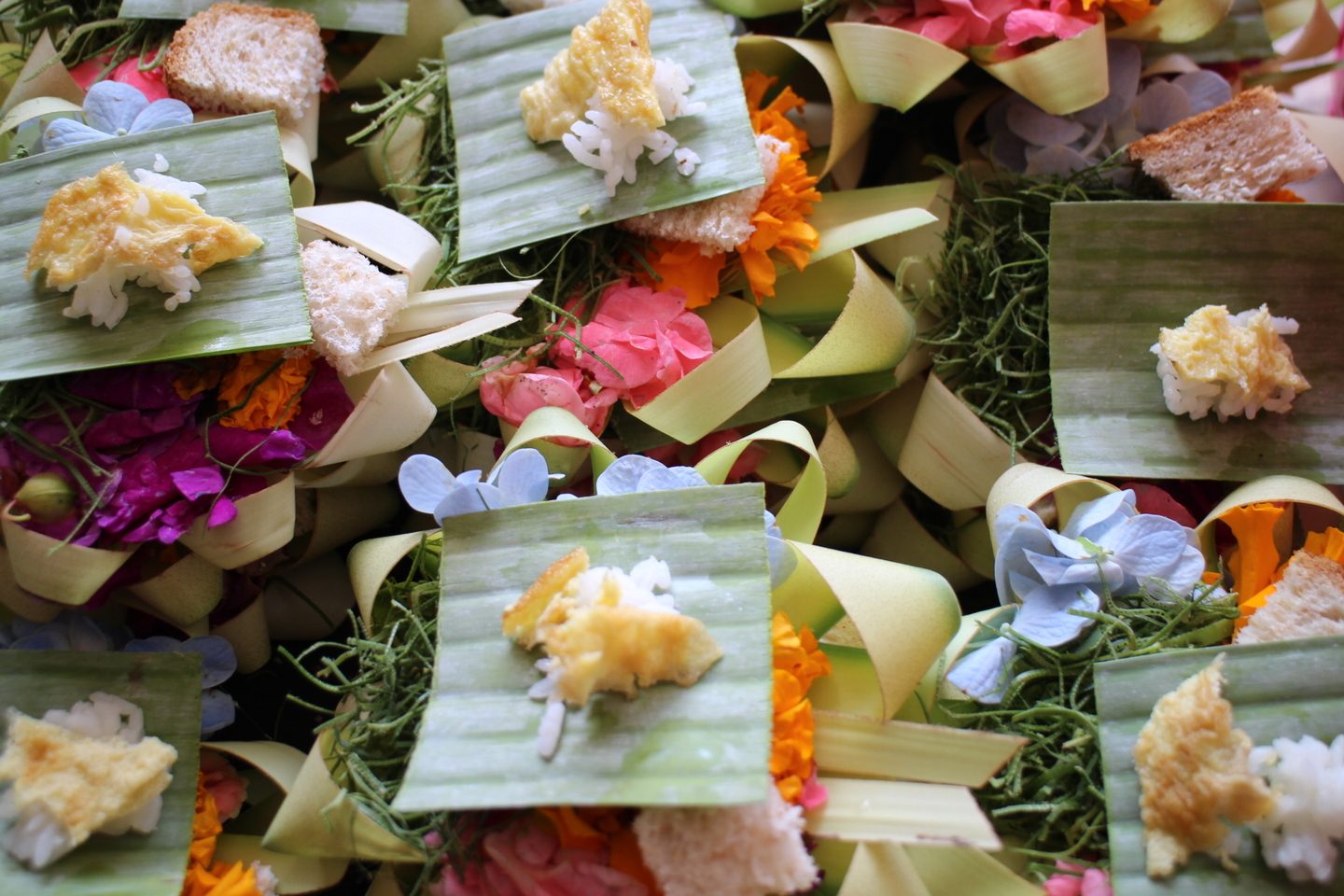
- Offerings of flowers, fruit and rice are carefully prepared, as a sign of respect to the gods and to the spiritual forces present.
- The priest chants Sanskrit prayers and rings a ceremonial bell to invite the gods. He then cleanses the object with holy water to drive out all negative influences.
- Through mantras the priest calls upon the supreme god — usually in the form of Shiva Pasupati — to fill the object with a spark of cosmic life energy.
Once the ceremony is over, the object is sakral: sacred. It is now charged with a protective energy and must be treated with deep respect. It may not simply be placed on the ground, for instance, nor handled by just anyone.
And Then, With Us
Once at Mala Spirit, the malas are welcomed with a ritual of gratitude. They are then unpacked and kept in an energetically clean room, where they are cleansed regularly with incense and sage. Before a mala is sent out, we cleanse it one more time. Then it is ready for its new home.
Wearing It Daily
Wear the beads as close to your skin as you can. The natural oils of your body soak into the rudraksha and darken them over time — that is the desired effect, and it gives every mala a unique patina.
Take your mala off before you sleep, and before you shower or swim. Not because anything will break, but because soap, chlorine and prolonged water dry the beads out and weaken the cord.
Cleansing When Your Mala Feels Heavy
It can happen that after a while of wearing your mala, it no longer feels good. The beads absorb so much energy that it is time to clean them.
You can follow the steps of the consecration above once more, or you can make a ceremony of your own. The form matters less than the attention and the respect you put into it.
Oiling
Rub the beads with a natural oil now and then. This stops them drying out — especially if you live somewhere dry or have not worn your mala for a while.
A few drops is enough. More oil does not protect the beads better, it only makes them greasy.
Storing
When you are not wearing your mala, keep it in a pouch and lay that in a special, clean and preferably consecrated place in your home. Keep the mala off the floor — in the tradition that is seen as disrespectful.
If it rests there for a long while, cleanse it energetically with incense now and then. We do the same at Mala Spirit with the malas we hold in stock.
What to Avoid
Perfume, hairspray and gel directly on the beads. Chlorinated water and the sauna. Sleeping with your mala on — the cord then bears a pull, night after night, in the same place.
And: lending your mala out, or letting someone else handle it. Tradition holds that rudraksha is not shared or passed on, because your energy gathers in the beads and the mala grows stronger for it. The exception is a blessing by a priest, your guru or a holy person.
If Your Mala Breaks
That is not bad news. In the tradition, a mala breaking stands for the breaking of a karmic cycle.
When someone comes to us with a broken mala, I first ask whether the above resonates. Often it does, and then it is time to return the mala to the earth: thank it, and bury it or give it to the sea.
Otherwise we repair it. The repair itself is free, and we do that with as much love as the mala was made with. If parts have to be replaced we may ask a contribution for those, as we do for postage.
Frequently Asked Questions About How to Take Care of a Mala
How often should I clean my mala?
There is no fixed schedule. Most people do it a few times a year, or whenever the mala begins to feel heavy. If you wear it daily, you will notice of your own accord when the time has come.
Can my rudraksha get wet?
A little water during cleansing is no problem — that is the traditional way. What you avoid is prolonged water, soap and chlorine: showering, swimming and the sauna.
Does this apply to a mala with gemstones too?
In part. The rudraksha can take a sprinkling, but a number of gemstones and semi-precious stones cannot — moonstone, selenite, malachite, calcite, fluorite and opal, for instance. If your mala holds such a stone, cleanse it with incense or sage rather than with water.
Which oil can I use?
A natural, unscented vegetable oil. Almond, coconut or sesame oil all work well. No mineral oil, and nothing with perfume in it.
My beads are getting darker — is that bad?
On the contrary. That is the effect you hope for. The oils of your skin soak into the rudraksha and give the mala a colour of its own over the years. There is more on the beads themselves in rudraksha mala beads, and on the structure of a mala in what is a mala.
Do I have to repeat the ceremony?
You do not have to, but you may. Some people do it again at a new beginning — a move, a new year, a period that is going to run differently, or whenever the mala starts to feel heavy.
How to use your mala while meditating is set out in how to use a mala. And if you are looking for a new one, you will find the malas of pure rudraksha in the Sacred collection, or one combined with gemstones in one of the other collections.