
Every rudraksha bead is divided into a number of natural segments. Those segments are called mukhi, or faces, and the number a bead carries is what gives it its particular meaning in the tradition. A one mukhi bead and a fourteen mukhi bead are the same fruit from the same tree, but they are used very differently.
This page sets out all fourteen, together with the rare Ganesh, Gaurishankar and Trijuti beads. If you are new to rudraksha altogether, our introduction to rudraksha mala beads is the better place to begin.
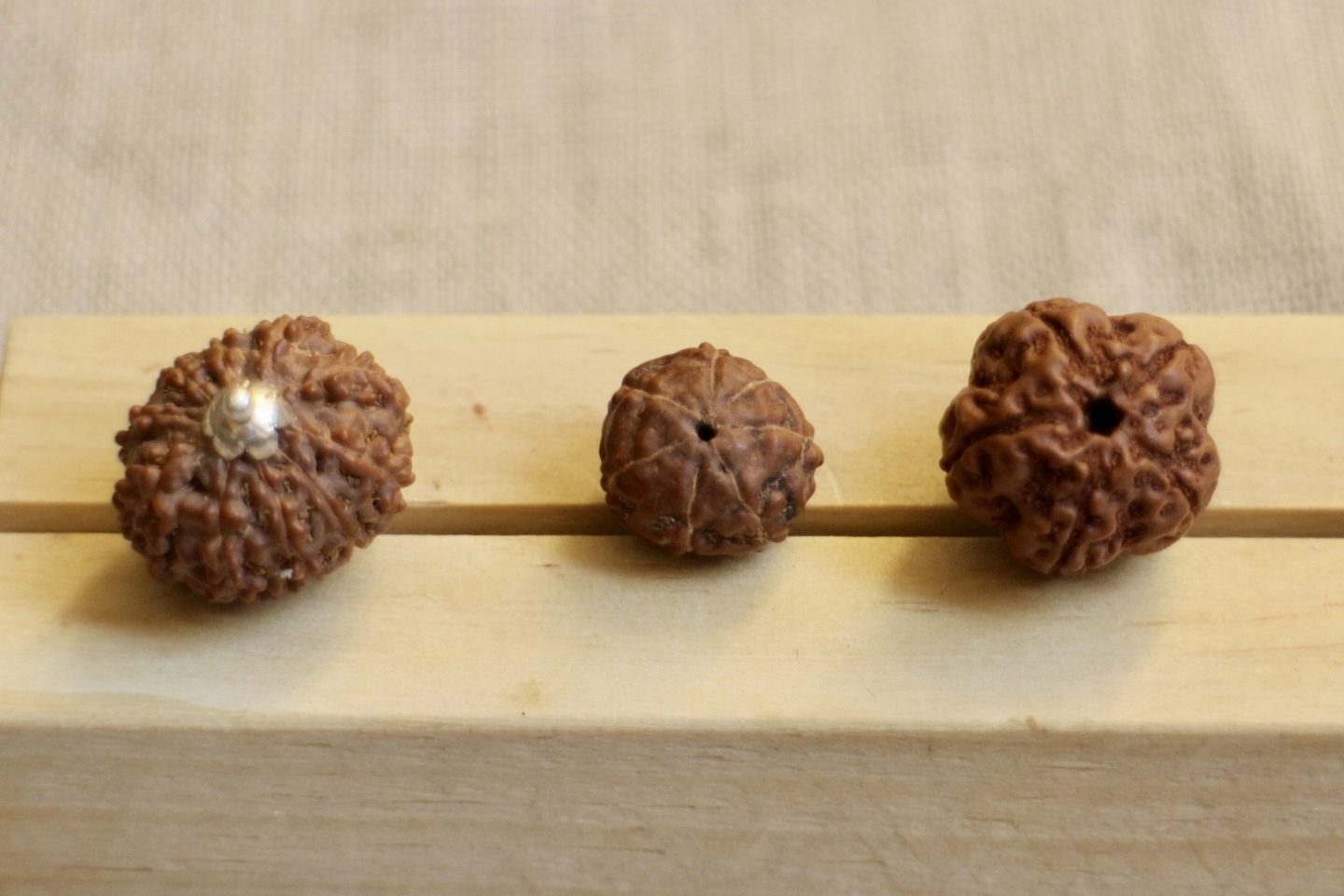
What is a Mukhi?
A mukhi is one of the natural clefts that run down the length of a rudraksha bead. You can count them from the outside: fine lines travel from the top of the bead to the bottom, and each line marks a division. A five mukhi bead has five clefts, and inside it has five seeds, one in each segment.
This matters for more than symbolism alone. Because the number of seeds inside matches the number of visible mukhi, an X-ray of a genuine bead shows exactly as many compartments as there are lines on the outside. It is the one reliable way to verify the number of mukhi, and it is where a fake bead gives itself away: the seeds are simply not there.
The number of mukhi generally ranges from 1 to 21, and beads with even more faces have occasionally been found. The sacred texts, and in particular the Shiva Purana, describe beads up to 14 mukhi. Those fourteen are the ones set out below.
The Fourteen Mukhi at a Glance
| Mukhi | Represents | Planet |
|---|---|---|
| One | Shiva himself | Sun (Surya) |
| Two | The union of Shiva and Shakti | Moon |
| Three | Agni, the fire | Mars |
| Four | Saraswati and Brahma | Mercury |
| Five | The five aspects of Shiva | Jupiter |
| Six | Kartikeya, son of Shiva and Parvati | Venus |
| Seven | The seven Divine Mothers | Saturn (Shani) |
| Eight | Ganesha, and the eight forms of Lakshmi | Rahu |
| Nine | Durga, the Goddess Shakti | Ketu |
| Ten | The ten avatars of Vishnu | None in particular |
| Eleven | Shri Hanuman, or Ekadash Rudra | None in particular |
| Twelve | Surya, the Sun God | Sun (Surya) |
| Thirteen | Kaamdev | Venus |
| Fourteen | Shiva, born of his eyes | Saturn |
A note on what follows: these descriptions come from Vedic and astrological tradition. They record what the tradition holds, not medical or scientific claims.
The Meaning of Each Mukhi
One Mukhi Rudraksha
Symbolism: an incarnation of Lord Shiva himself. Very rare, and held to be among the most auspicious and powerful of all rudraksha. Those who wear one mukhi are said to be blessed by Shiva directly.
Spiritual and karmic qualities: traditionally associated with abundance and prosperity, with the dissolving of difficult karma, with growing knowledge, and with the fulfilment of noble desires.
Planet: the Sun (Surya). Said to temper the malefic influence of the Sun.
Two Mukhi Rudraksha
Symbolism: represents Shiva as the right half of the body and Shakti as the left. It stands for the union of feminine and masculine, and reminds us that we are one — that there is no true separation between us and the Divine.
Spiritual and karmic qualities: associated with abundance, with the dissolving of karma, and with harmony in relationships and a deeper understanding of them.
Planet: the Moon. Said to temper the malefic influence of the Moon.
Three Mukhi Rudraksha
Symbolism: represents fire (Agni), which burns and consumes everything yet remains pure and full of power.
Spiritual and karmic qualities: traditionally said to purify a person of past wrongdoing and allow them to live free of guilt, and to lift lethargy, fear and insecurity.
Planet: Mars, which represents Agni. Said to temper the malefic influence of Mars.
Four Mukhi Rudraksha
Symbolism: represents Saraswati and Brahma, and so carries the blessing of knowledge and creativity.
Spiritual and karmic qualities: associated with intelligence, learning and the power of speech; with the dissolving of karma and with success; and with self-knowledge, memory and clarity of mind.
Planet: Mercury. Said to temper the malefic influence of this planet.
Five Mukhi Rudraksha
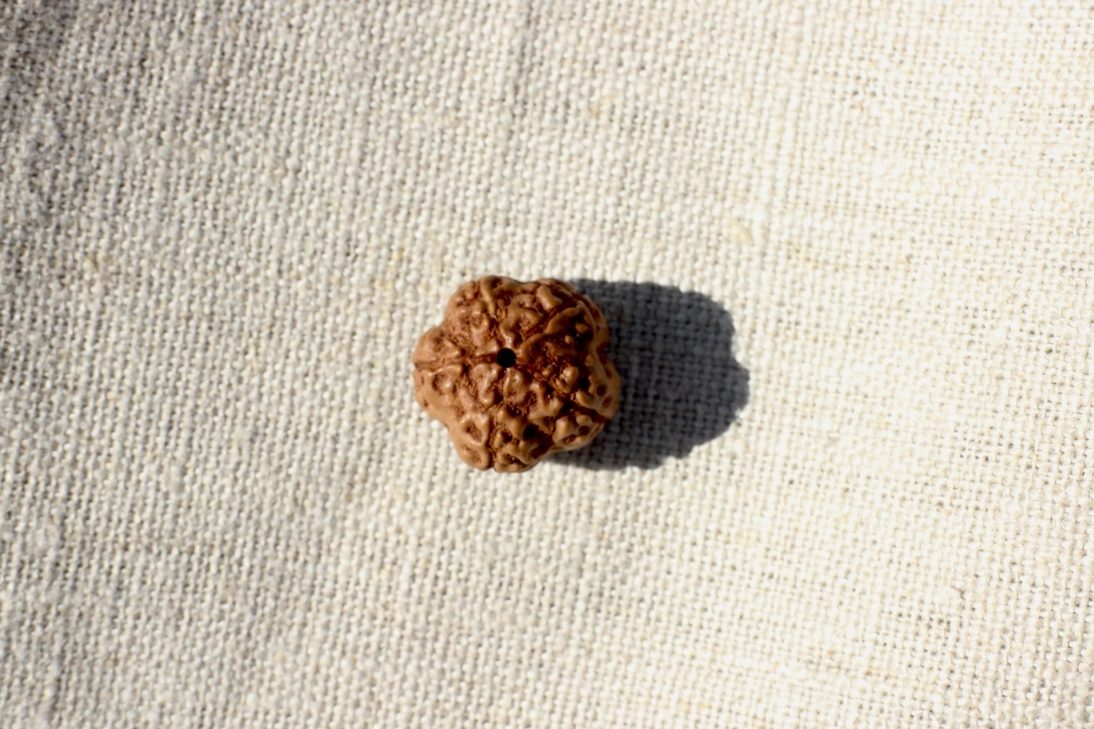
Symbolism: represents Lord Shiva. Each mukhi stands for one of the five aspects of Shiva — Tatpurusha, Ishana, Aghora, Vamadeva and Sadyojata (creation, preservation, destruction, detachment and obligation). One who wears the five mukhi is said to be blessed by Shiva himself.
Spiritual and karmic qualities: associated with releasing fear and attachment, with the dissolving of karma, and with a deepening spirituality and a peace that comes through balance.
Planet: Jupiter. Said to temper the malefic influence of this planet.
This is the bead we use in all our malas. It is the most widely worn of all rudraksha and the one traditionally strung as a mala for the neck.
Six Mukhi Rudraksha
Symbolism: represents the six faces of Kartikeya, son of Shiva and Parvati. Kartikeya stands for divine knowledge and for the single-pointed awareness needed to overcome the inner enemy of ignorance. Those who wear this bead are said to be blessed by Mahalakshmi and Devi Parvati.
Spiritual and karmic qualities: associated with health, good fortune and prosperity; with wisdom, eloquence and willpower; and with courage and the dissolving of karma.
Planet: Venus. Said to temper the malefic influence of this planet.
Seven Mukhi Rudraksha
Symbolism: represents the seven Divine Mothers (Sapta Matrika), the Shaktis or energies of the deities. This energy is said to overcome ignorance by dissolving the inner enemies of desire, anger, greed, jealousy, possessiveness, obsession and ego. The bead is also said to represent the Sapta Rishis, who watch over the balance of the universe and guard the divine laws.
Another tradition, the Shiva Purana, attributes the seven mukhi rudraksha to Ananga (Kamadeva).
Spiritual and karmic qualities: associated with dissolving negative karma and with prosperity, recognition, good fortune and health.
Planet: Saturn (Shani). Said to temper the malefic influence of this planet.
Eight Mukhi Rudraksha
Symbolism: represents Ganesha, and is said to help overcome obstacles and difficulties linked to Saturn. It also symbolises the eight forms of Lakshmi.
Spiritual and karmic qualities: associated with prosperity, recognition and success, with health and intelligence, and with creativity in writing and the arts. Traditionally linked with dharma and with living truthfully.
Planet: Rahu, whose malefic influence it is said to neutralise.
Nine Mukhi Rudraksha
Symbolism: blessed by Durga, the Goddess Shakti, who is said to have taken birth on earth nine times in different forms to protect her devotees. These nine goddesses are honoured during the festival of Navaratri.
Spiritual and karmic qualities: traditionally said to cleanse the wearer of wrongdoing of many kinds.
Planet: Ketu, a shadow planet like Rahu, whose negative influence it is said to soften.
Ten Mukhi Rudraksha
Symbolism: represents the ten avatars of Vishnu.
Spiritual and karmic qualities: said to ease suffering caused by the influence of the nine planets, and to protect the wearer from negative energy work. It is also held to help with difficulties that have no obvious explanation, and to give direction to those who have lost their way in life or work.
Planet: none in particular. It is used to balance the influence of all the planets together.
Eleven Mukhi Rudraksha
Symbolism: blessed by Shri Hanuman, who is also known as Ekadash Rudra (Shiva).
Spiritual and karmic qualities: associated with the path of liberation, and with the courage and self-confidence that make an adventurous life possible.
Planet: no single ruling planet.
Twelve Mukhi Rudraksha
Symbolism: blessed by Surya, the Sun God, and — according to the Rudrakshajabala Upanishad — by Lord Vishnu.
Spiritual and karmic qualities: associated with leadership, fearlessness and the inner strength to guide others.
Planet: the Sun (Surya). Said to temper the malefic influence of the Sun.
Thirteen Mukhi Rudraksha
Symbolism: blessed by Kaamdev.
Spiritual and karmic qualities: traditionally said to fulfil all desires and dissolve negative karma, to sharpen concentration, and to lead the wearer towards moksha.
Planet: Venus. Said to temper the malefic influence of this planet.
Fourteen Mukhi Rudraksha
Symbolism: blessed by Lord Shiva himself, and said to have come from his eyes. Known as the ruler of the Ajna chakra — the third eye.
Spiritual and karmic qualities: associated with opening the Ajna chakra and strengthening the power of visualisation, and with protection and sound judgement in everything the wearer undertakes.
Planet: Saturn. Worn to soften the malefic influence of this planet.
Rare and Special Rudraksha
Alongside the numbered mukhi, a few forms occur naturally that are prized for their rarity. They surface only a handful of times in any given season.
Gaurishankar Rudraksha
Two beads grown naturally fused together.
Symbolism: represents the union of Shiva and Shakti.
Spiritual and karmic qualities: associated with harmony between partners and with the merging of masculine and feminine into oneness. Said to bring peace and contentment to relationships by encouraging patience, tolerance and insight into the illusions of the mind and the play of the ego.
Planet: not applicable.
Trijuti Rudraksha
Three beads grown together as one, also known as Gauri Path. Rarer than Gaurishankar.
Symbolism: represents the Trimurti — Brahma the creator, Vishnu the preserver and Shiva the regenerator — and so the three principles of existence.
Planet: not applicable.
Ganesh Rudraksha
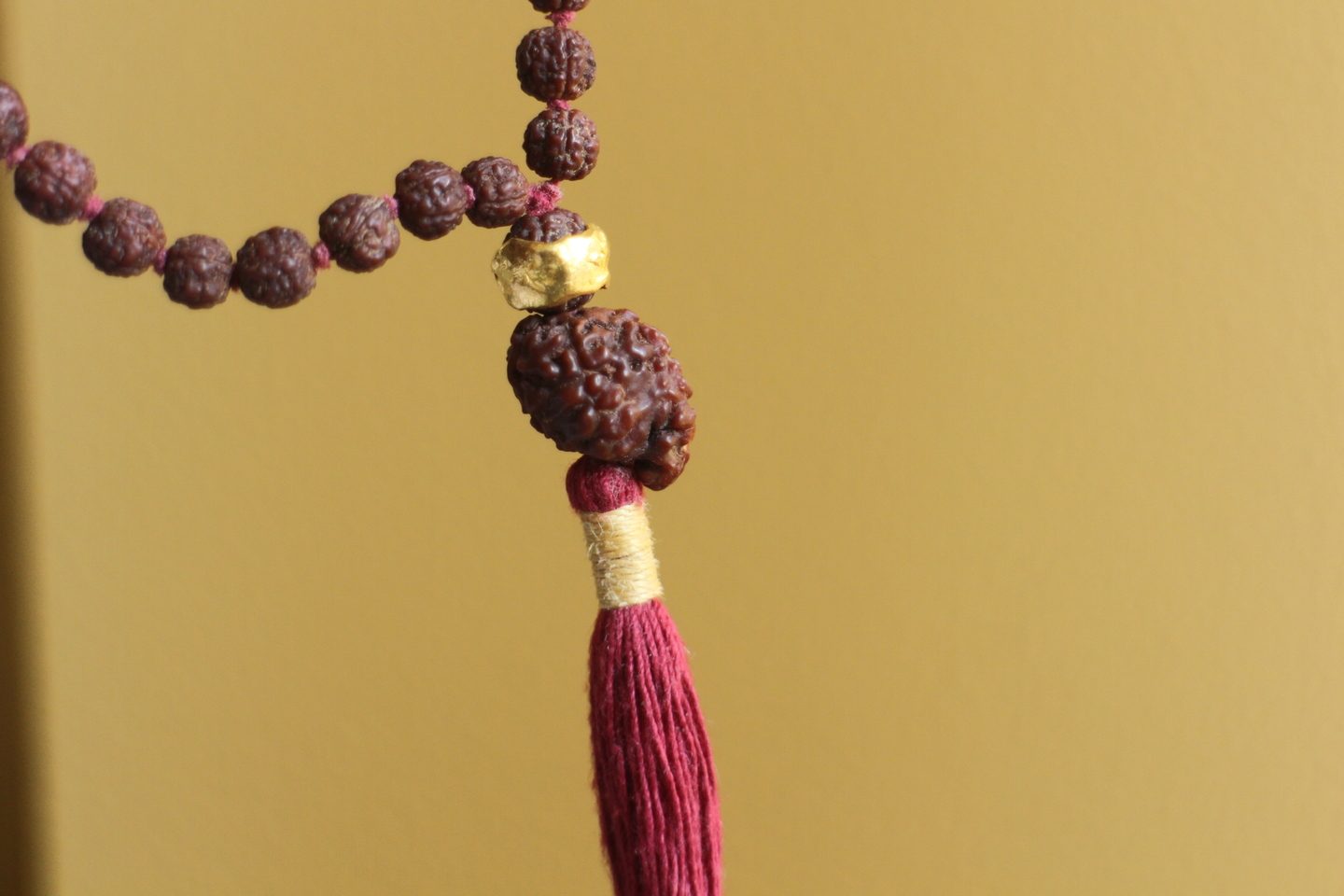
A bead bearing a natural trunk-like protrusion.
Symbolism: represents Ganesha, who removes all obstacles and grants the highest knowledge of the Self.
Spiritual and karmic qualities: said to deepen meditation by settling mental disturbance. This special bead is most often kept at a place of worship rather than worn.
Planet: not applicable.
Which Mukhi Should You Choose?
This is the question everyone arrives with, and it deserves an honest answer rather than a sales one.
The tradition offers three broad approaches. Some choose by planet, working with a Vedic astrologer who reads their chart and identifies which planetary influence would benefit from tempering. Some choose by intention, picking the mukhi whose associated qualities speak to where they are in their life. And many choose the five mukhi, which is regarded as suitable for anyone and carries no restrictions at all.
For most people beginning with rudraksha, the five mukhi is where to start. It is the bead the tradition places no conditions on, the one worn most widely, and the one strung into malas for daily wear. The higher mukhi are rare, expensive and, in the astrological tradition, chosen for specific circumstances rather than worn generally.
It is also worth saying plainly that no bead is a substitute for medical, financial or psychological help. A mala is a support for practice and a reminder of your intention. What it asks of you is attention, not belief.
Each design in our mala necklaces says which mukhi it holds; for the wrist, all our mala bracelets are in one place.
Frequently Asked Questions
How do I count the mukhi on a rudraksha bead?
Look for the fine lines running from the top of the bead to the bottom. Each unbroken line marks one division. Count the lines around the full circumference of the bead and you have the mukhi. Natural lines follow the contours of the bead and wander slightly; carved lines are too regular and cut across the natural grooves.
Which mukhi is the most common?
The five mukhi, by a wide margin. It is the bead most rudraksha malas are made from, including ours.
Which mukhi is the rarest?
Among the numbered beads, the one mukhi. Among all forms, Trijuti — three beads naturally grown together — is rarer still.
Can I wear different mukhi together?
Yes, and the tradition has settled ways of doing it. Certain combinations are strung deliberately as a single mala: the Siddha mala, the Indra mala and the Dhyan Yog mala each bring particular mukhi together for a particular purpose. Beyond those established malas, different mukhi are usually combined on the advice of a Vedic astrologer, or following an assessment of what someone is working with at that moment.
If you are putting a combination together yourself, two things are worth holding on to. Choose mukhi whose qualities complement one another rather than work against each other, and do not wear too many different types at the same time. A few beads chosen with care will serve you better than a collection gathered at random.
Does a higher mukhi mean a better bead?
No. Higher mukhi beads are rarer and therefore more expensive, but rarity is not the same as suitability. In the astrological tradition the higher mukhi are chosen for particular circumstances, while the five mukhi is regarded as appropriate for anyone.