
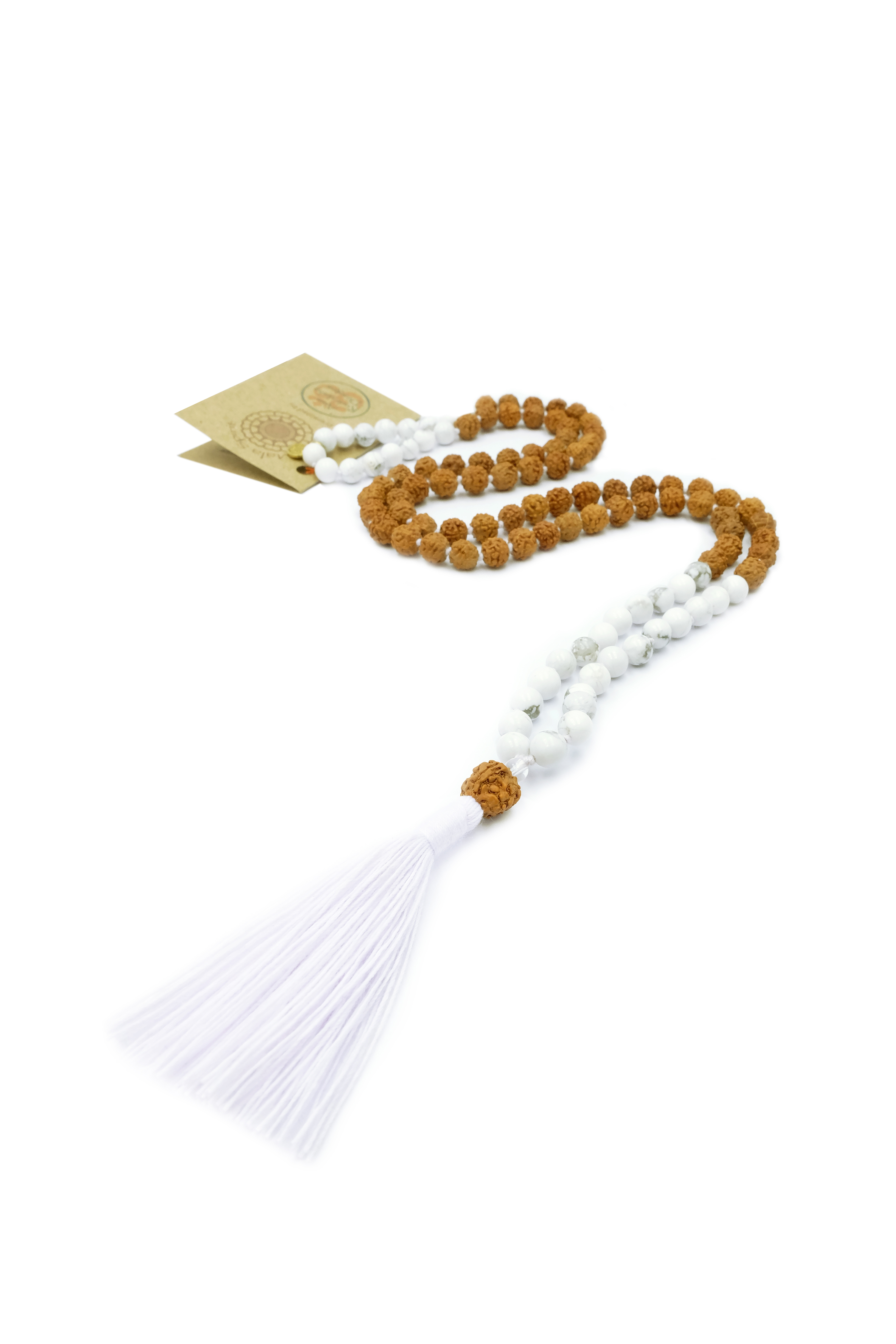
A mala is originally a prayer chain. For thousands of years it has been worn and used by Hindus and Buddhists during puja (prayer) and meditation to count mantras. A mala is a symbol of compassion, and today many people also wear it as a fashion accessory.
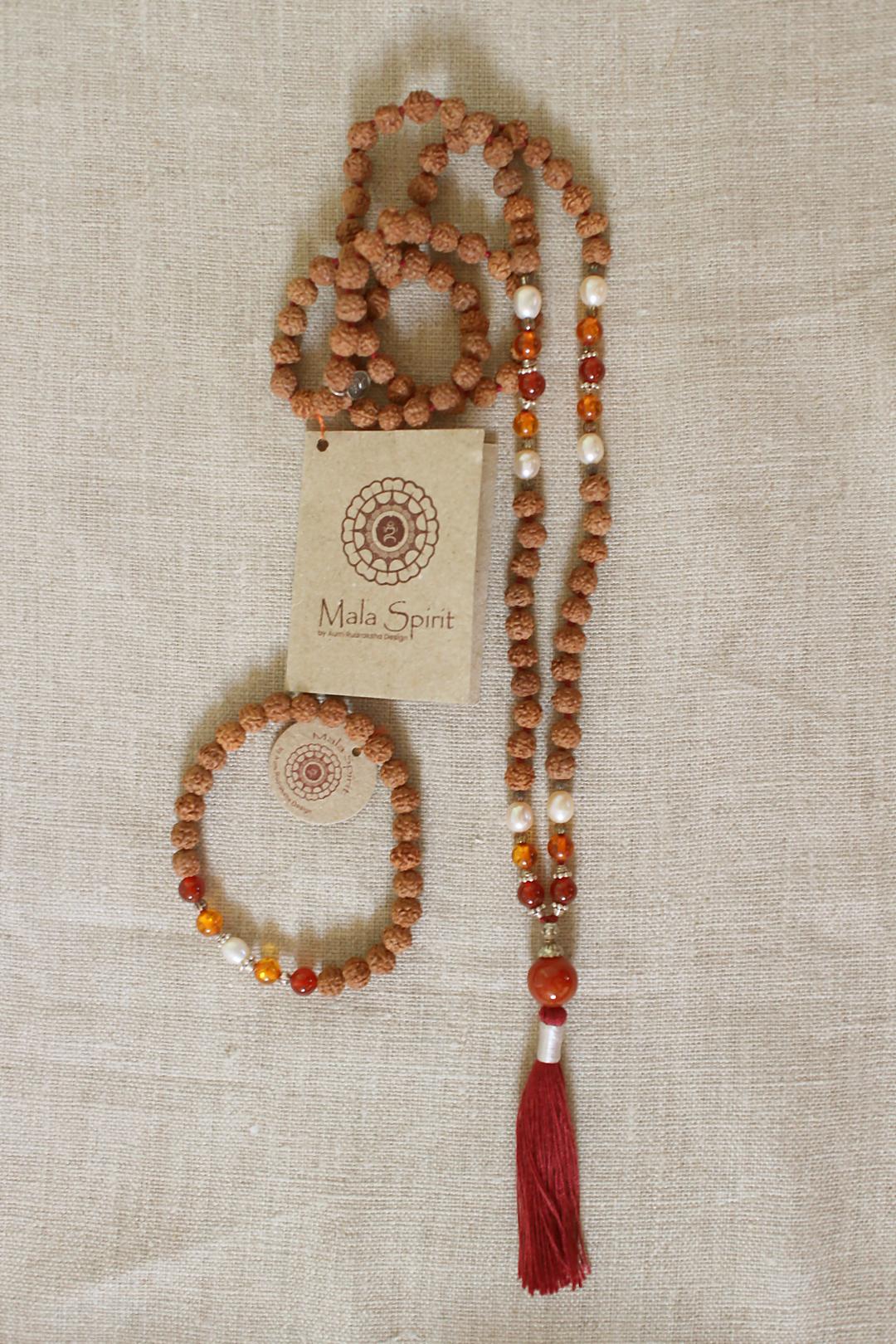
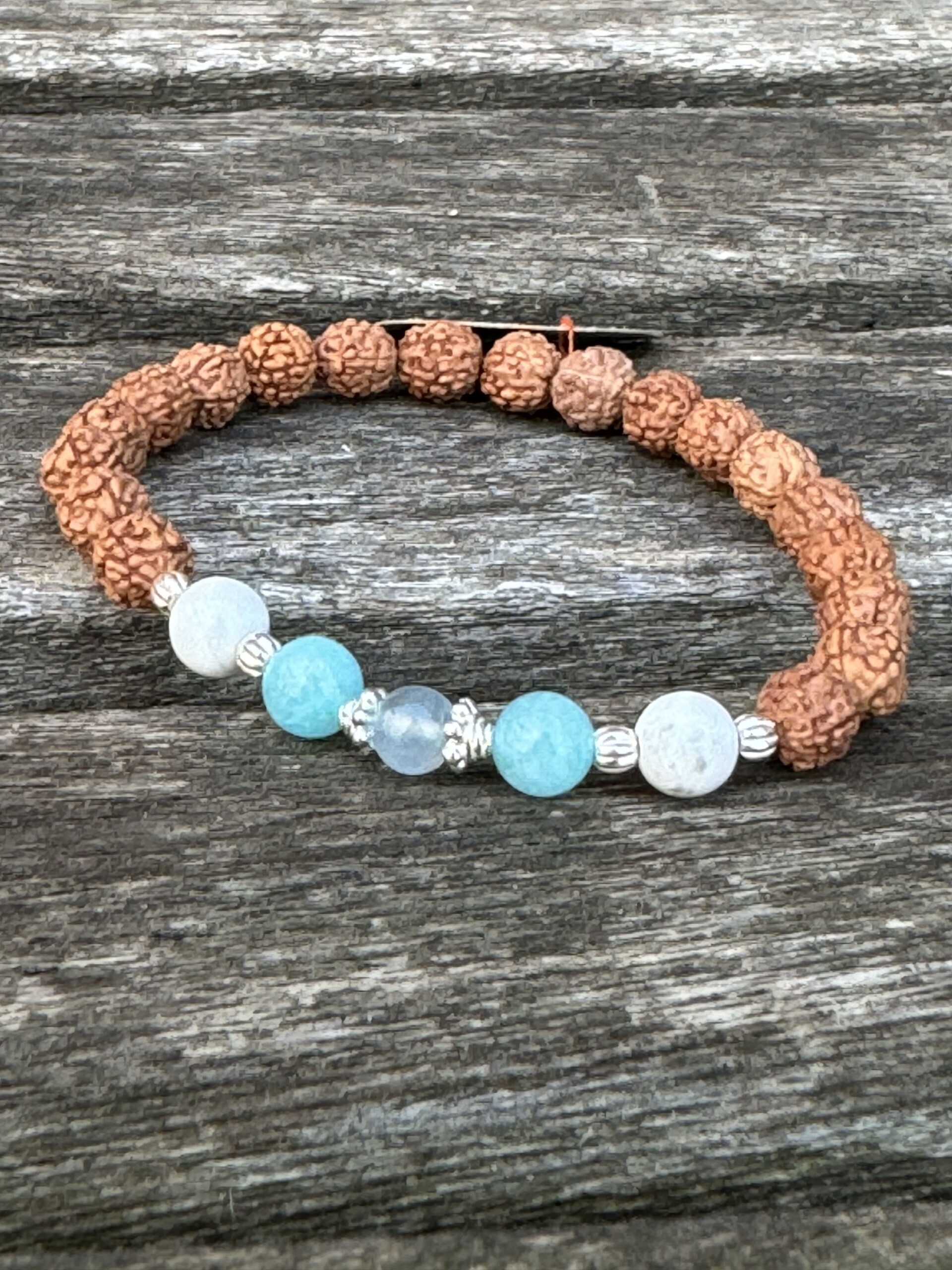
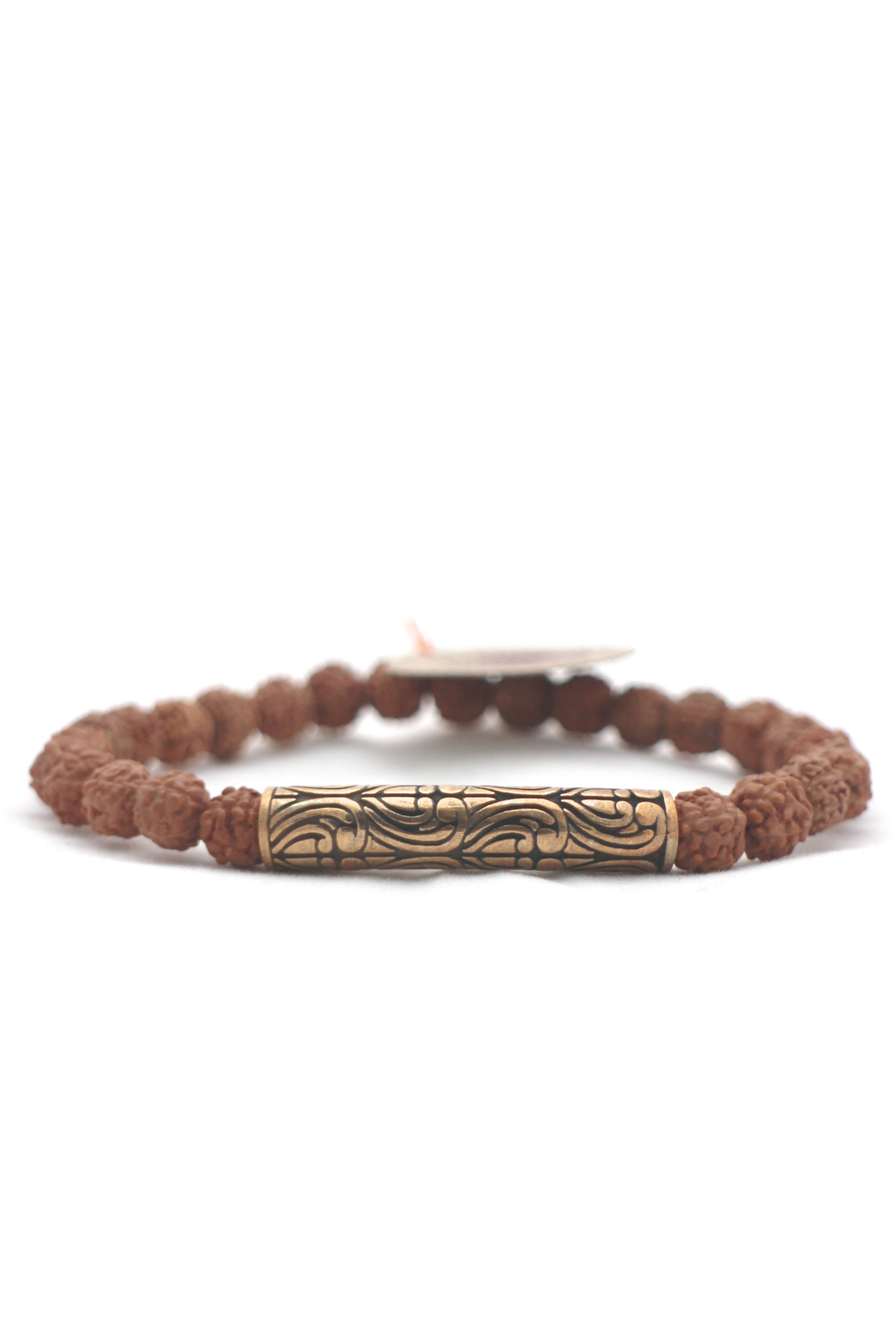
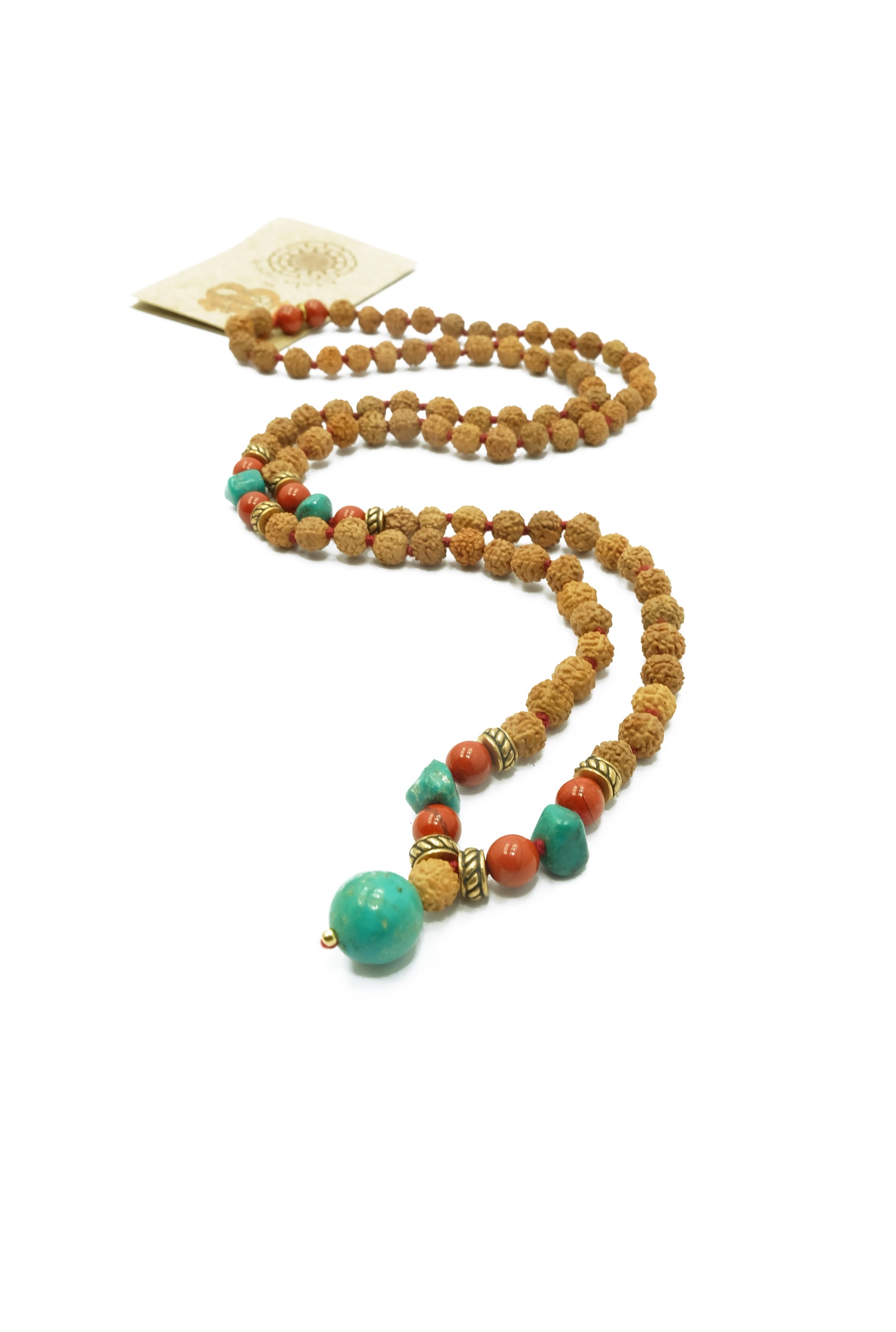
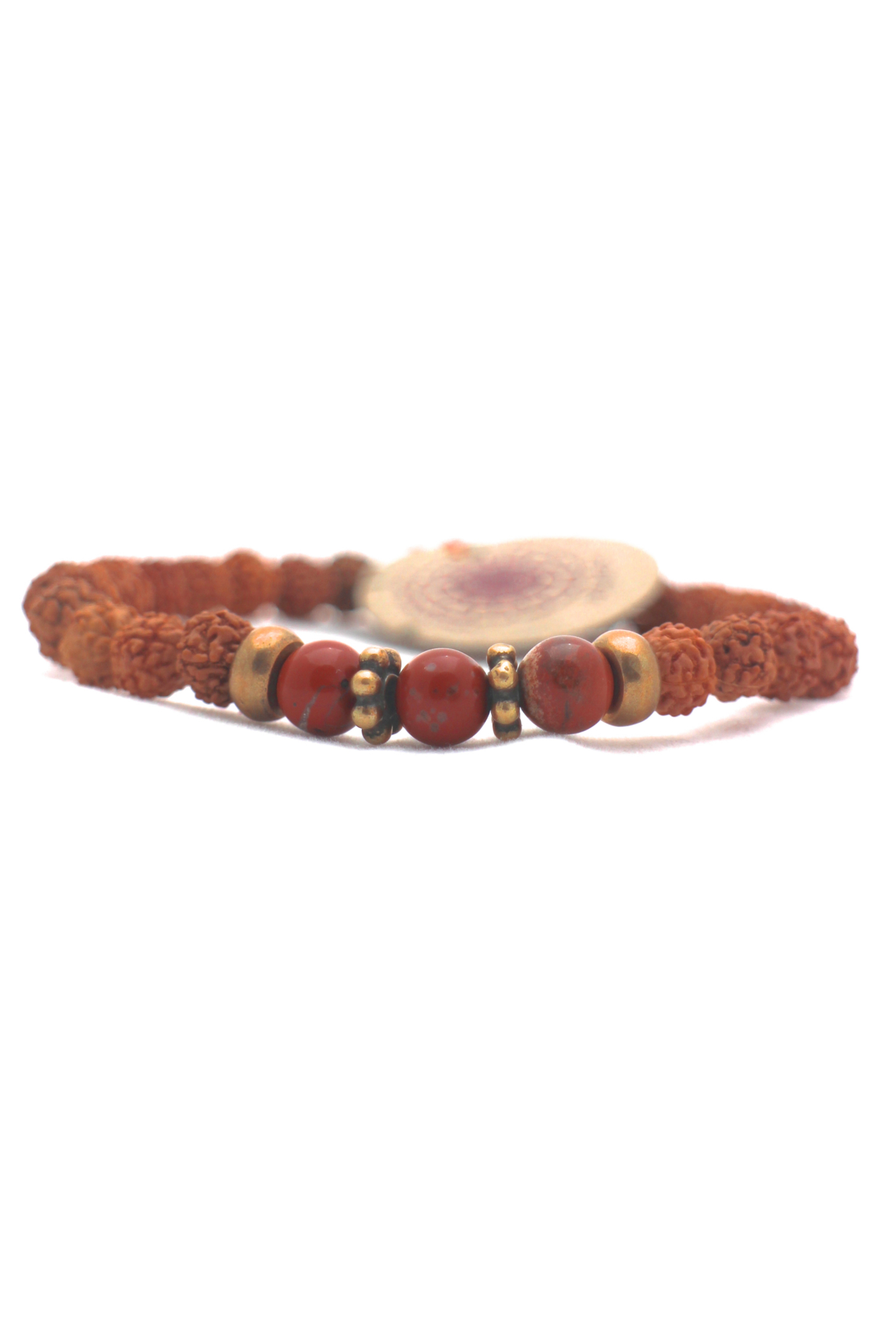
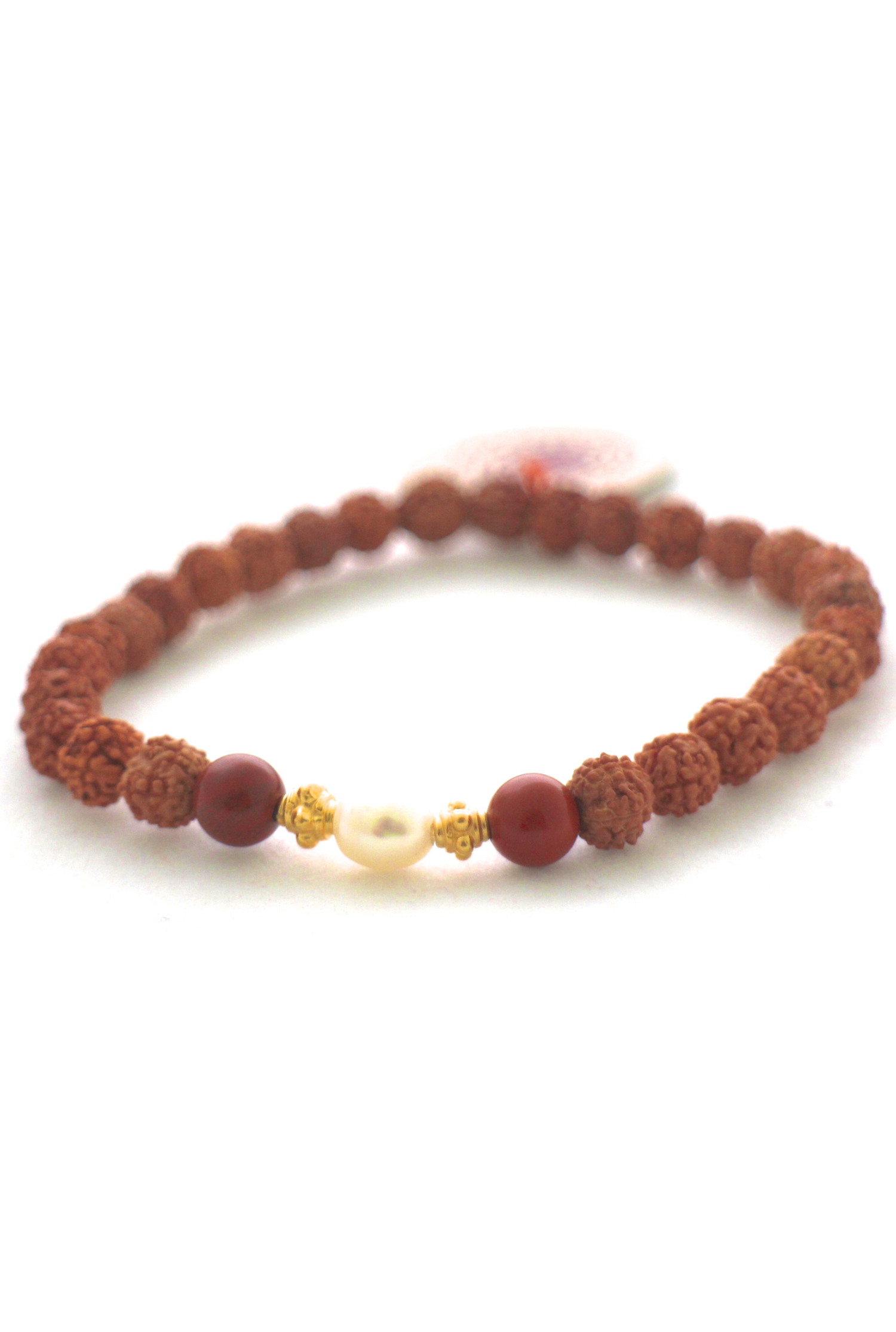
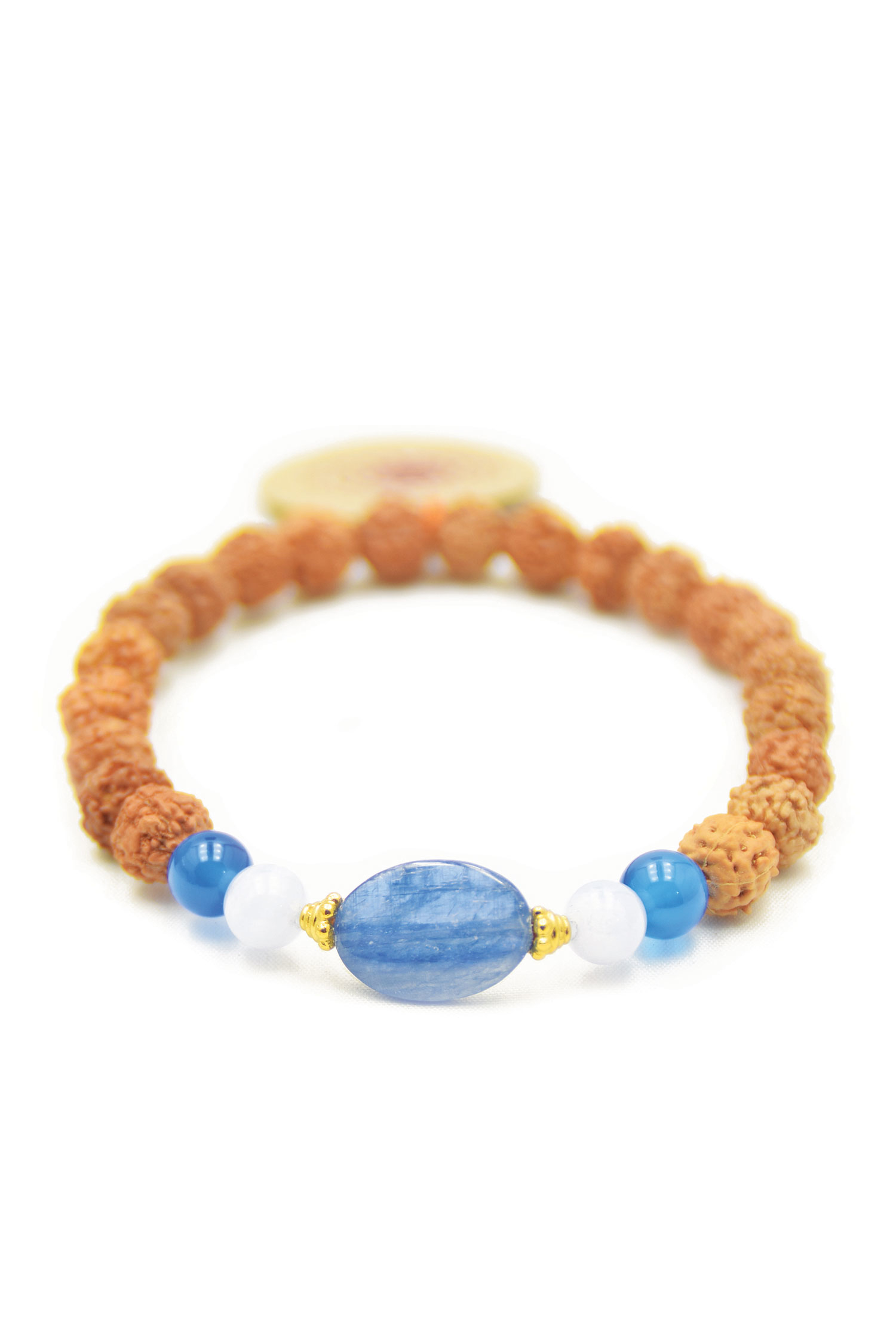
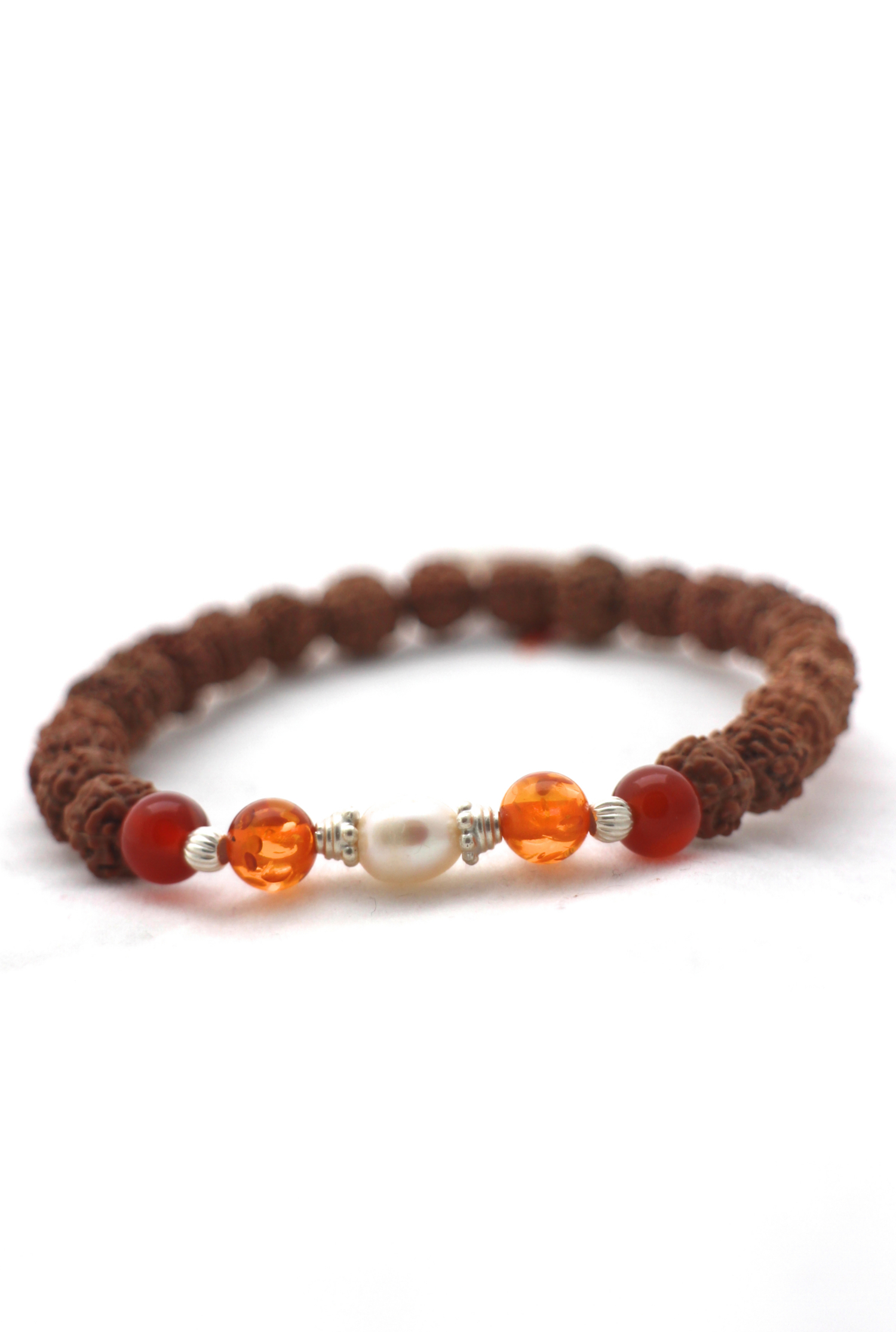
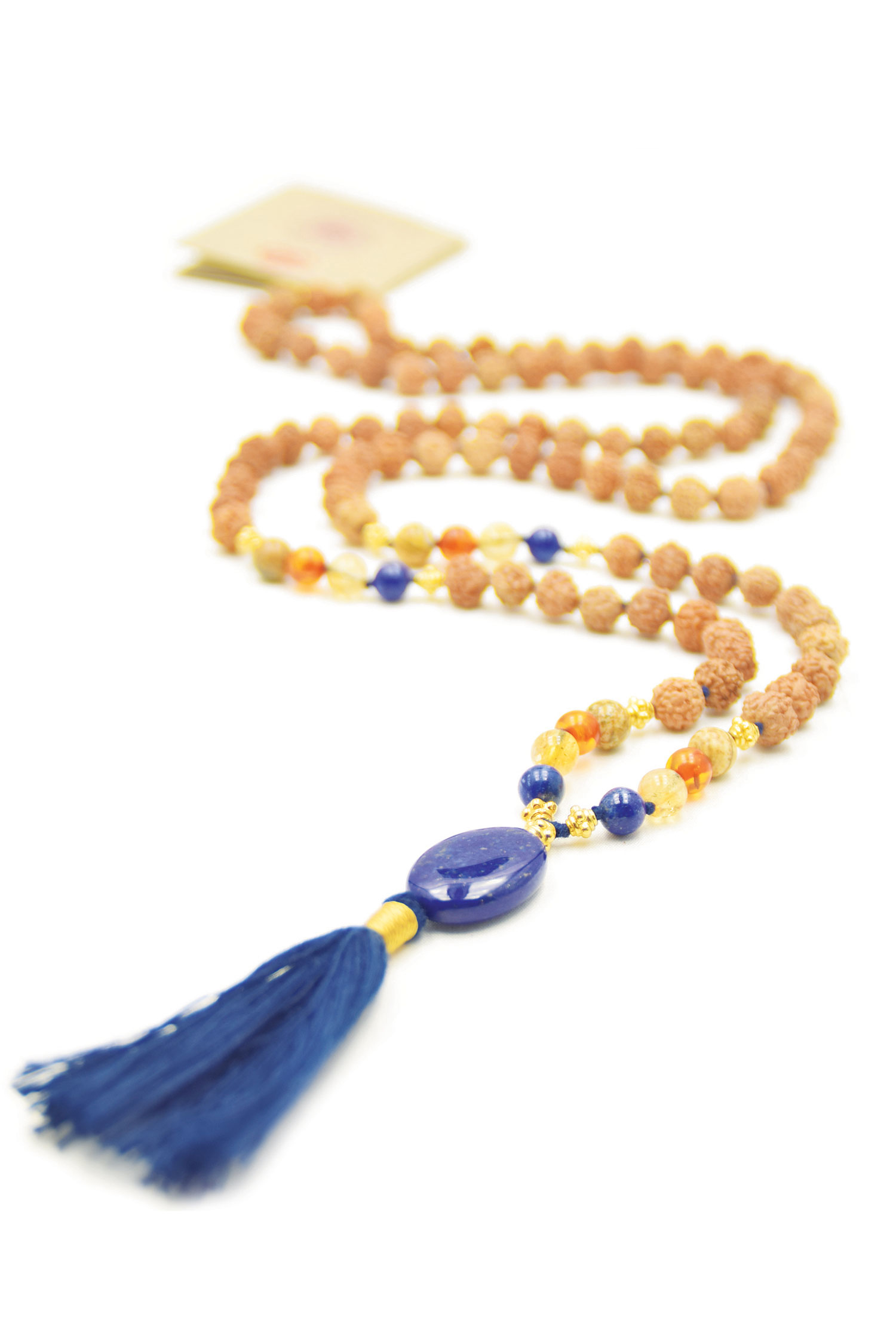
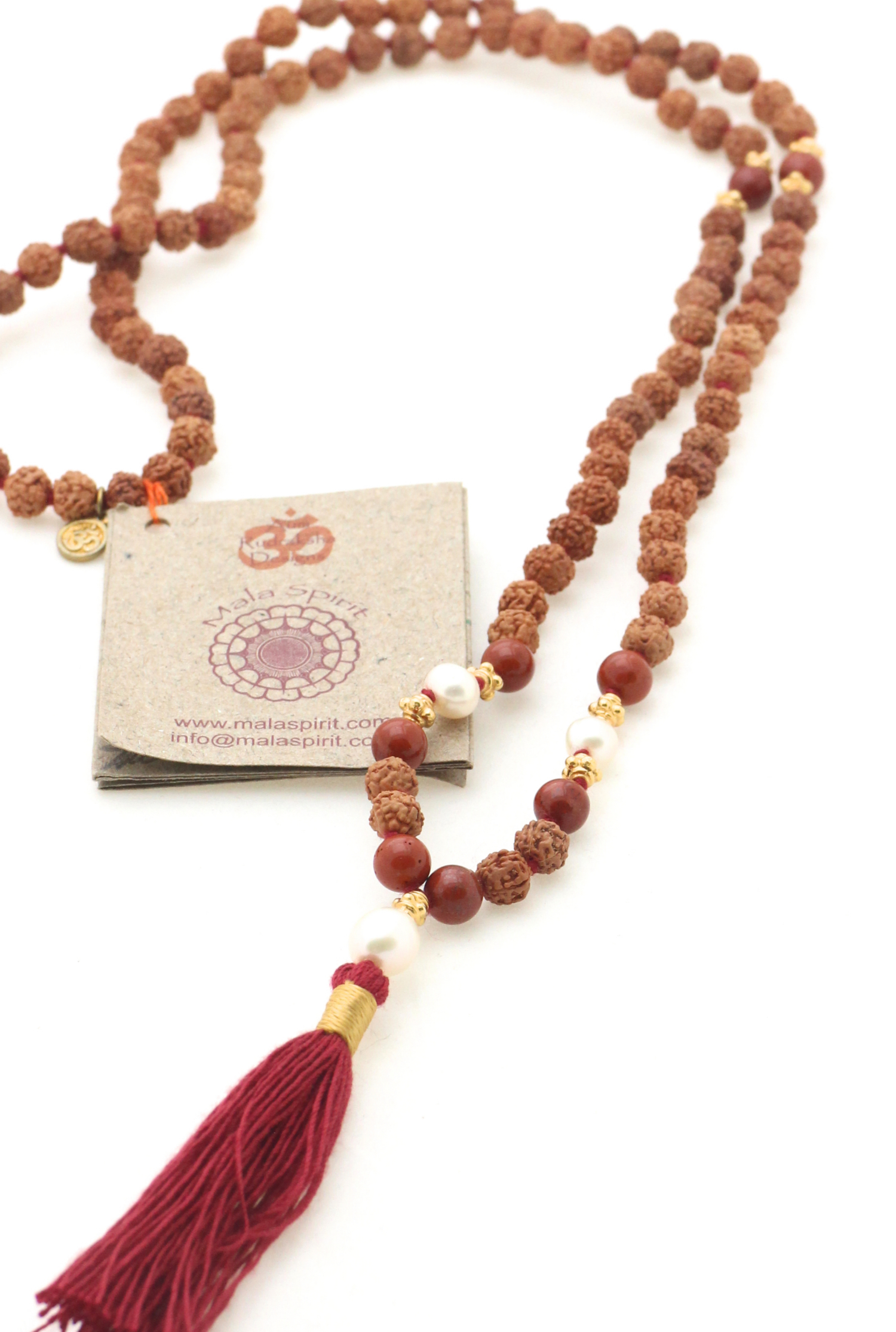
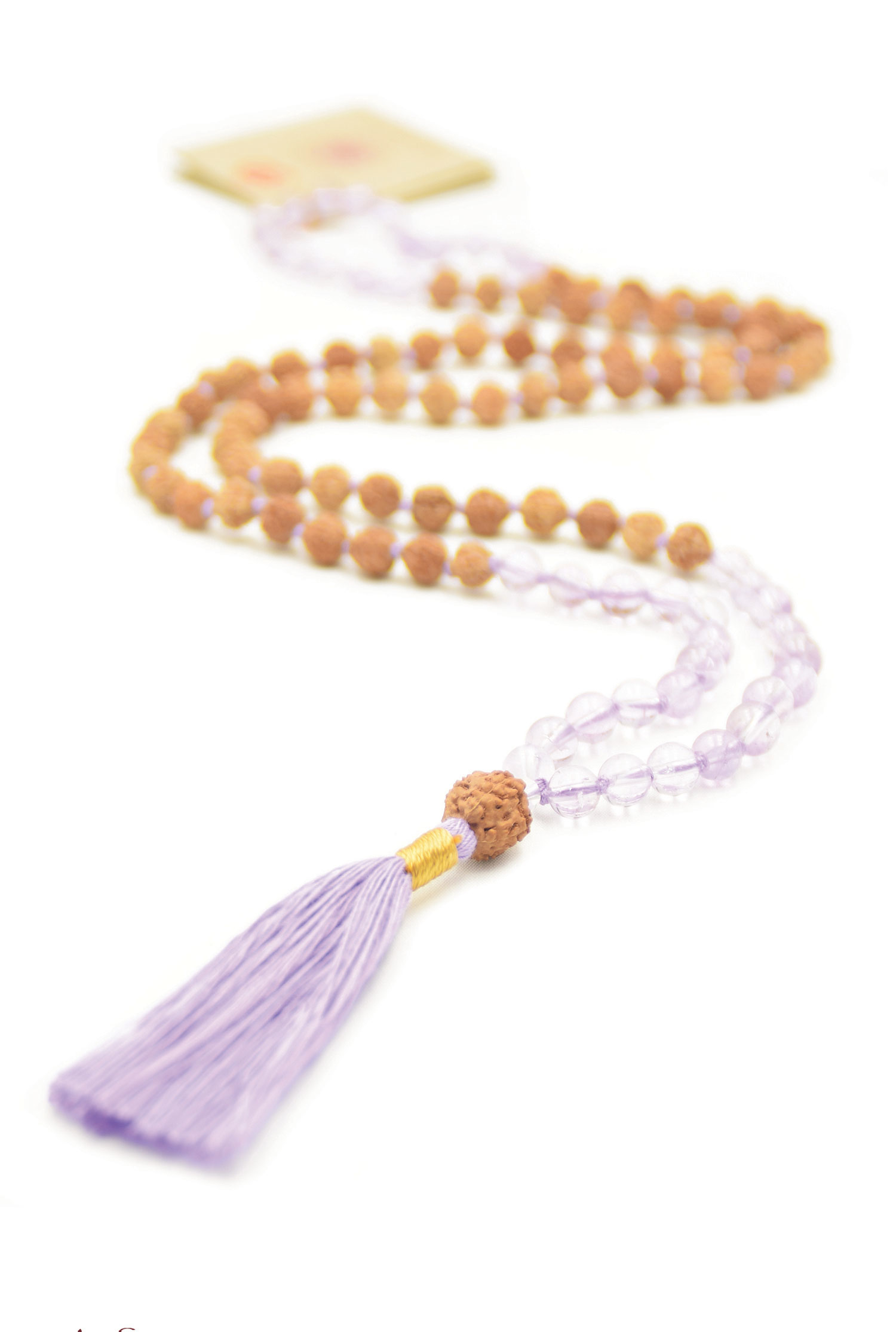
The malas are made of rudraksha seeds, often combined with gemstones, silver or gold. Rudraksha seeds are the stones of the fruit of the Elaeocarpus tree, a fruit that resembles a blueberry. The tree grows in Malaysia, in Southeast Asia and in the Himalayas in India and Nepal. Our authentic seeds come from sustainable plantations in Southeast Asia.
The name rudraksha comes from Hindu mythology and means “the tears of Shiva”. It is said that the god Shiva meditated on the welfare of mankind and wept tears of compassion. Where these tears touched the earth, rudraksha trees (Elaeocarpus) grew.
In the Hindu tradition, rudraksha is considered sacred. It is said to give its wearer calm, clarity and direction, to cool the body and to protect against negative forces and thoughts.
Rudraksha seeds range in size from 3 mm to 40 mm. The smaller the seed, the rarer and more expensive it is. The beads last a very long time: they are known to have been passed on for up to eight generations. Each bead has a number of facets or grooves on the outside, called mukhi or mukha. The number of mukhi ranges from 1 to 21, and each number has its own meaning and qualities. We mainly use rudraksha with five mukhi, which symbolize the god Shiva. They are the most popular. Malas are mostly worn around the neck.
Every piece is made by hand on Bali by the local team of ARD. One of the things that makes our malas unique is that we receive the rudraksha without holes, fresh from the tree. The harvested seeds are worked in the same direction in which they grew: they are drilled from the top (where they were attached to the branch) to the bottom and knotted that way, to preserve the natural prana, the life energy.
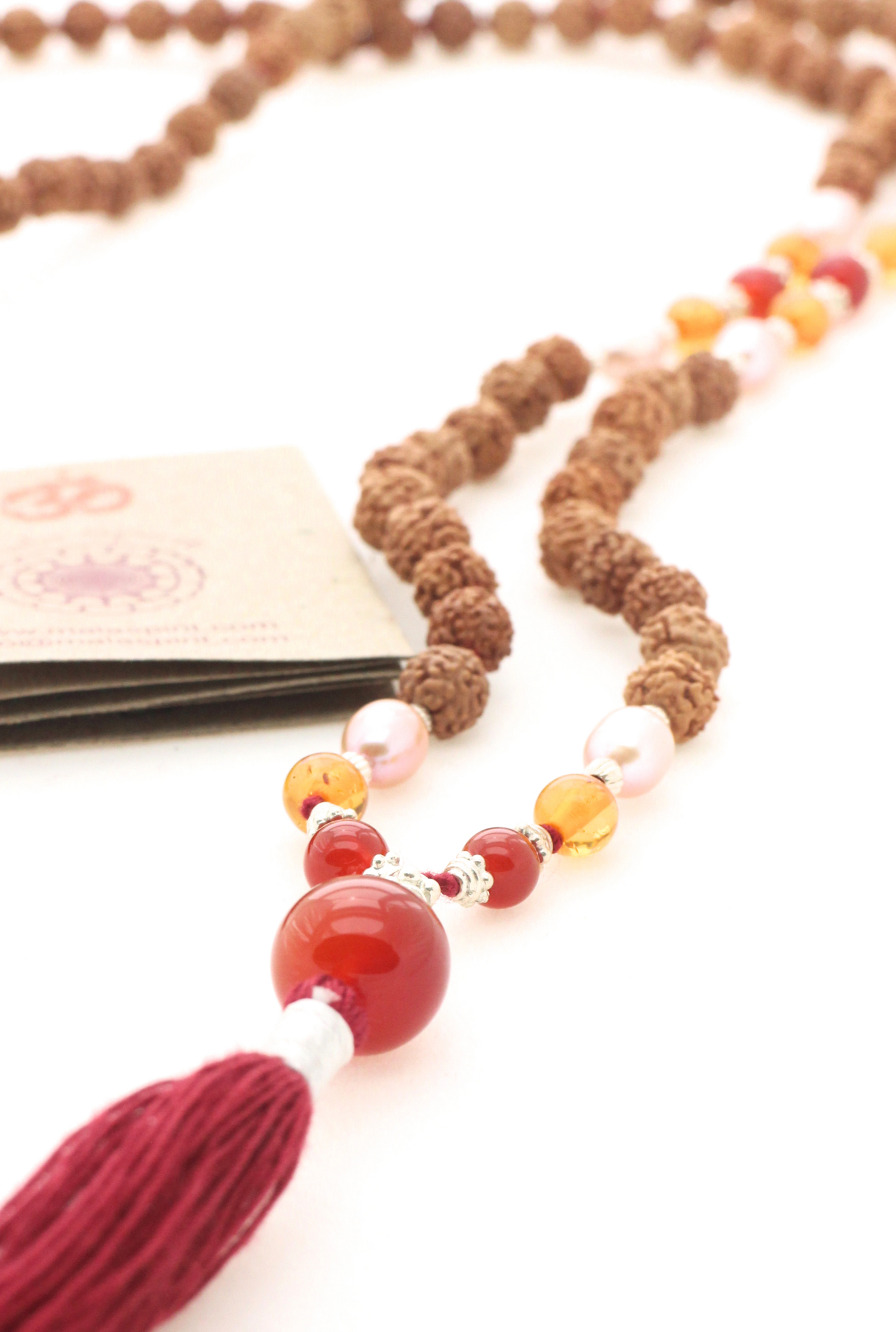
Our malas follow the sacred number 108. Some malas have 2 × 10⁸ beads, others 72. The extra bead that closes the mala is the guru bead and it is not counted. This bead makes it easier to count mantras during meditation. It symbolizes the crown chakra, marks the start, turning point and end, and is not used as a prayer bead.
There are several explanations for the meaning of 108. Throughout history the number appears often in astronomy, astrology and symbolic counting, in both East and West. The diameter of the sun × 108 is roughly the distance between the sun and the earth, and the diameter of the sun is about 108 times that of the earth. The diameter of the moon × 108 is roughly the distance between the earth and the moon.
Some believe there are 108 stages on the path of the human soul. In Tibetan Buddhism there are 108 human sins, which is why reciting a mantra 108 times is considered a sacred act. Shiva Nataraja dances his cosmic dance in 108 poses. Krishna danced with 108 gopis (cowherd girls) and later married 108 women. Many Buddhist temples have 108 steps.
The number 72 is also spiritual: Indian architecture can be seen as an arithmetic sequence based on 72. The main Krishna temple in Dwarka, for example, is built on 72 pillars, and the upper part of the Borobudur temple complex on Java has three terraces with 72 openwork stupas.
Malas are often used to count mantras during meditation. A mantra is a word or sound that you repeat to focus your concentration. Traditionally you lay the mala over your middle or ring finger (avoiding the index finger, which stands for the ego). With your thumb you move one bead over your finger after each mantra. The extra bead near the tassel is the guru bead and stands for the crown chakra. It is not a prayer bead but marks the start, turning point and end. You always start to the left of the guru bead. When you reach the guru bead, pause for a moment. Do not go past it. If you want to do another round, turn the mala around, so that you continue clockwise and the first bead becomes the last.
Your mala can also help you in daily life when you become “unaware”. When you feel it on your neck during the day, bring your attention back to your breath. When you lean forward and the mala comes into view, it is a new, gentle awakening.
Rudraksha are considered sacred and should be treated with respect and care. Wash them now and then with water and soap to remove dirt and dust, and rub them with natural oils. Your mala will darken over time. This is the desired effect: natural (body) oils soak into the beads and strengthen them. Wear your mala close to your skin.
When you are not wearing it, keep it in a special, clean and preferably sacred place. Keep it off the floor, and cleanse it with incense when it has not been used for a while. We recommend not wearing the jewelry while sleeping.
The advice not to wear your mala while sleeping mainly has to do with the strong energy of rudraksha. The seeds of Shiva can stimulate the mind too much during rest and intensify dreams. On the other hand, the seeds have a calming effect when the mind is too active. When you are traveling, we do recommend wearing your mala at night as well, because the seeds have a protective effect, which can feel very pleasant in an unfamiliar place. Some people find it uncomfortable to lie on the fairly coarse seeds. Others feel comfortable and safe with their mala close to them while they sleep. How you use it is personal and also depends on the gemstones in your mala. Find out for yourself what feels right.
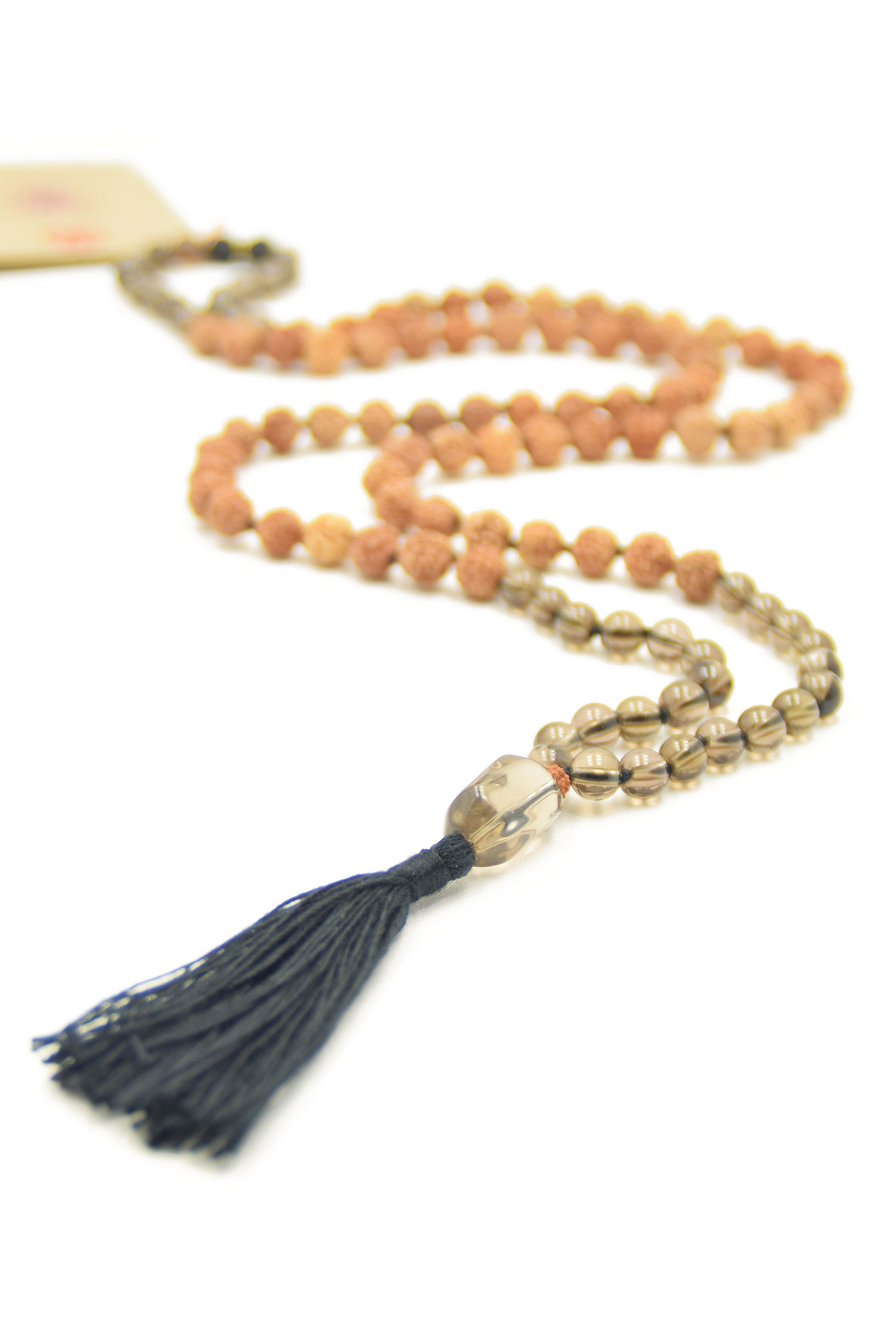
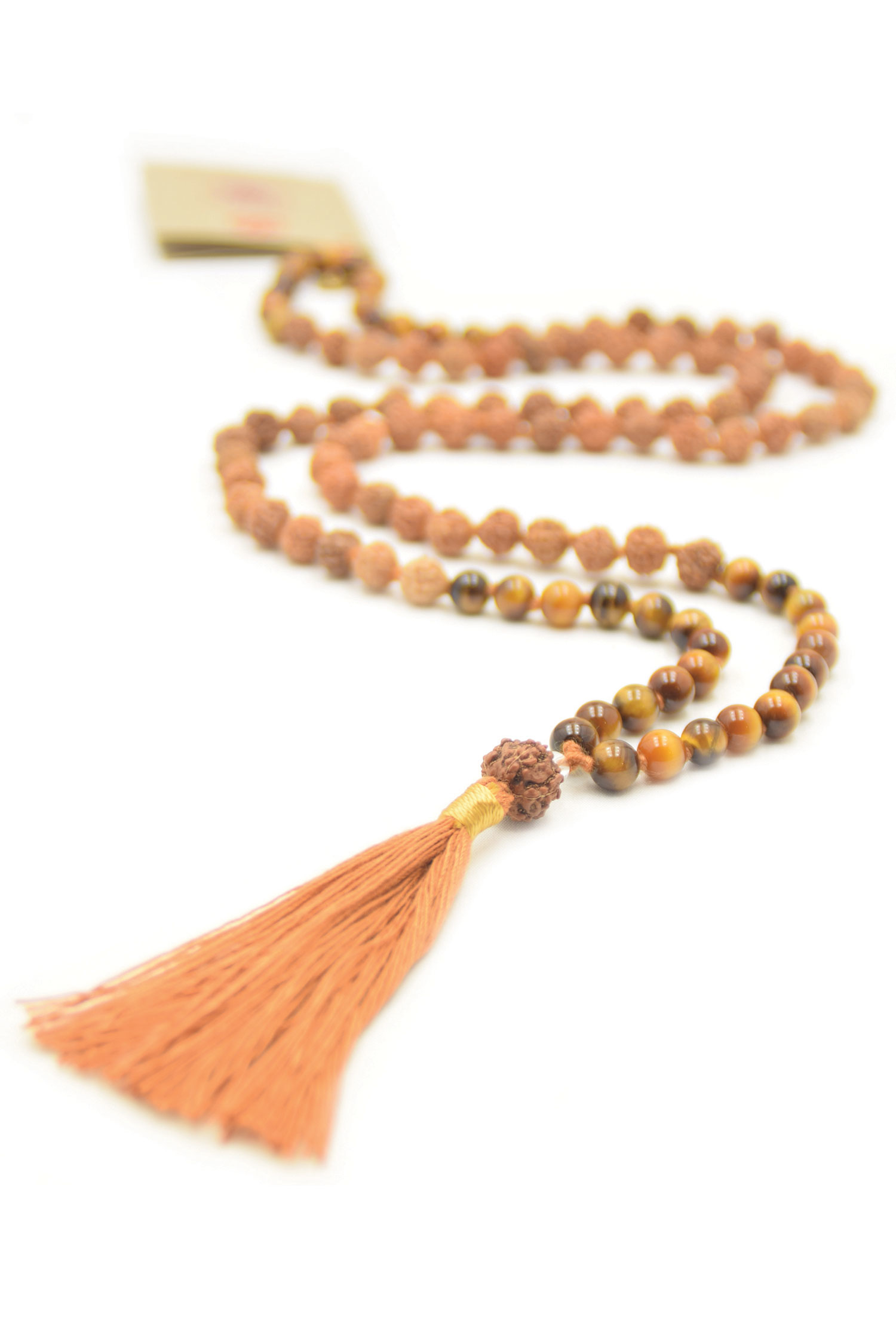
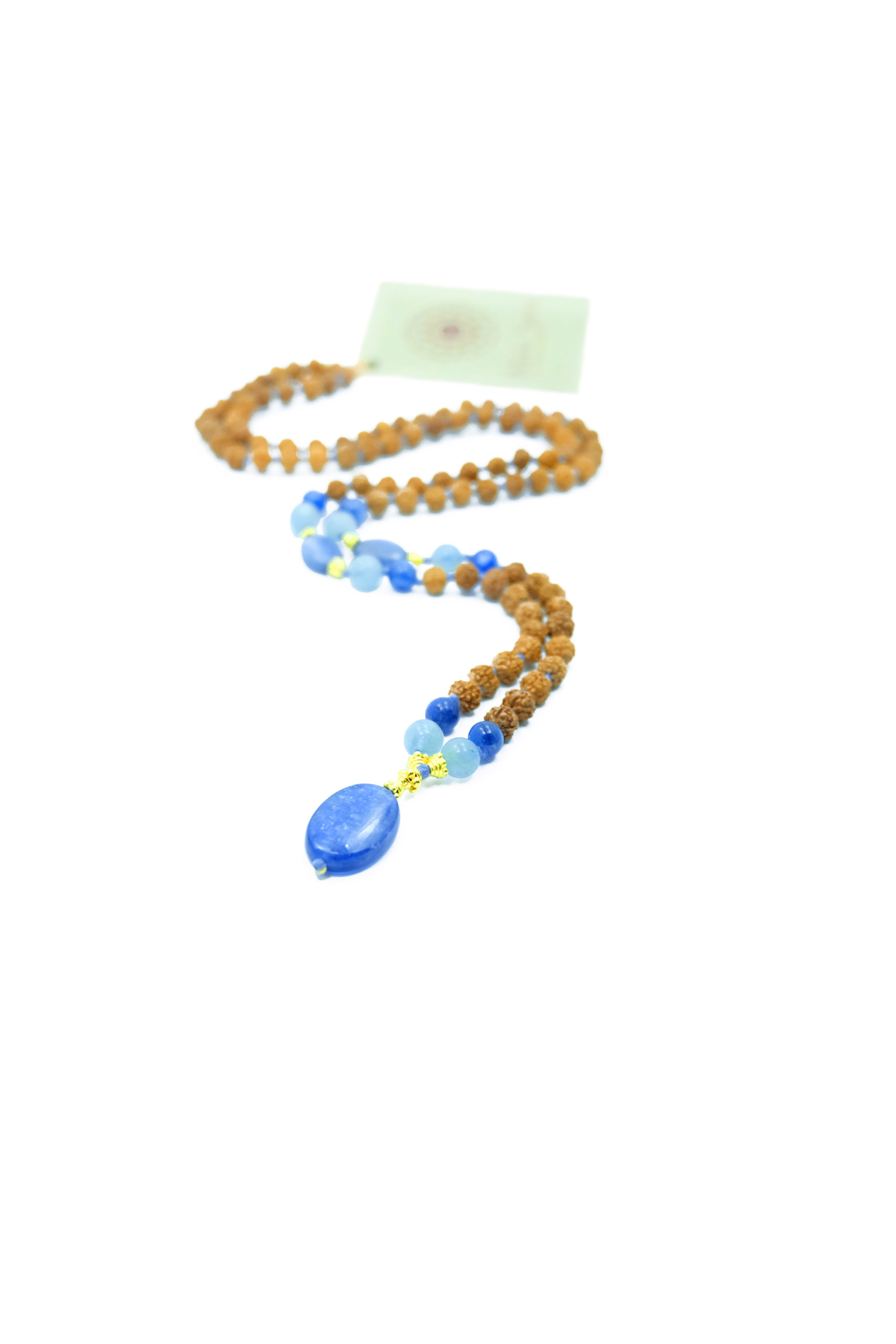
Every piece is made by hand, from hand-picked rudraksha and gemstones selected for their vibrations and energies. Each gemstone is unique and may vary in size, color and pattern. The hanging length can also vary slightly depending on the knots. The quality of the rudraksha and gemstones is always equally high.
Many people believe in the healing qualities of rudraksha and gemstones, but our products are not intended to diagnose, treat, cure or prevent any disease. The results are the sole responsibility of the person wearing the jewelry. For the treatment of any medical condition, please consult your doctor. Our product information is not a substitute for a thorough consultation and examination by a doctor.
All our jewelry is handmade, so some beads may be knotted a little too tightly. As you wear your mala, it will gradually hang more smoothly. You can also gently work the beads with circular movements, as if washing them, to loosen the seeds a little.
The hanging length of each mala is 50% of its total circumference. It is measured including the pendant and tassel, unless the tassel is worn at the back of the neck.
From the day of delivery, you have 14 days to return the jewelry without giving a reason. If you have already paid, we will refund the purchase price. Rudraksha jewelry that has been worn is an exception: it cannot be taken back, because its special energetic qualities mean it cannot be sold again. You are of course welcome to try the jewelry on to check the fit.
We repair broken malas, for example as a result of a break in the ‘karmic’ cycle, free of charge and with love, unless agreed otherwise. A broken mala symbolizes a karmic cycle that has been released. By repairing it, you bring back the cycle that has just been released. But if you wish, we will do it gladly and with as much love as if we were knotting the mala for the first time.
You can send in broken malas for repair. We give a warranty of up to 4 months after purchase. It can take up to 10 weeks before you get your mala back. The repair itself is free of charge. The shipping costs, including shipping to Bali, are paid by you, both within and outside the warranty period. Mala Spirit is not liable for items lost during repair or shipping.
See also our General Terms and Conditions.



Bewaren