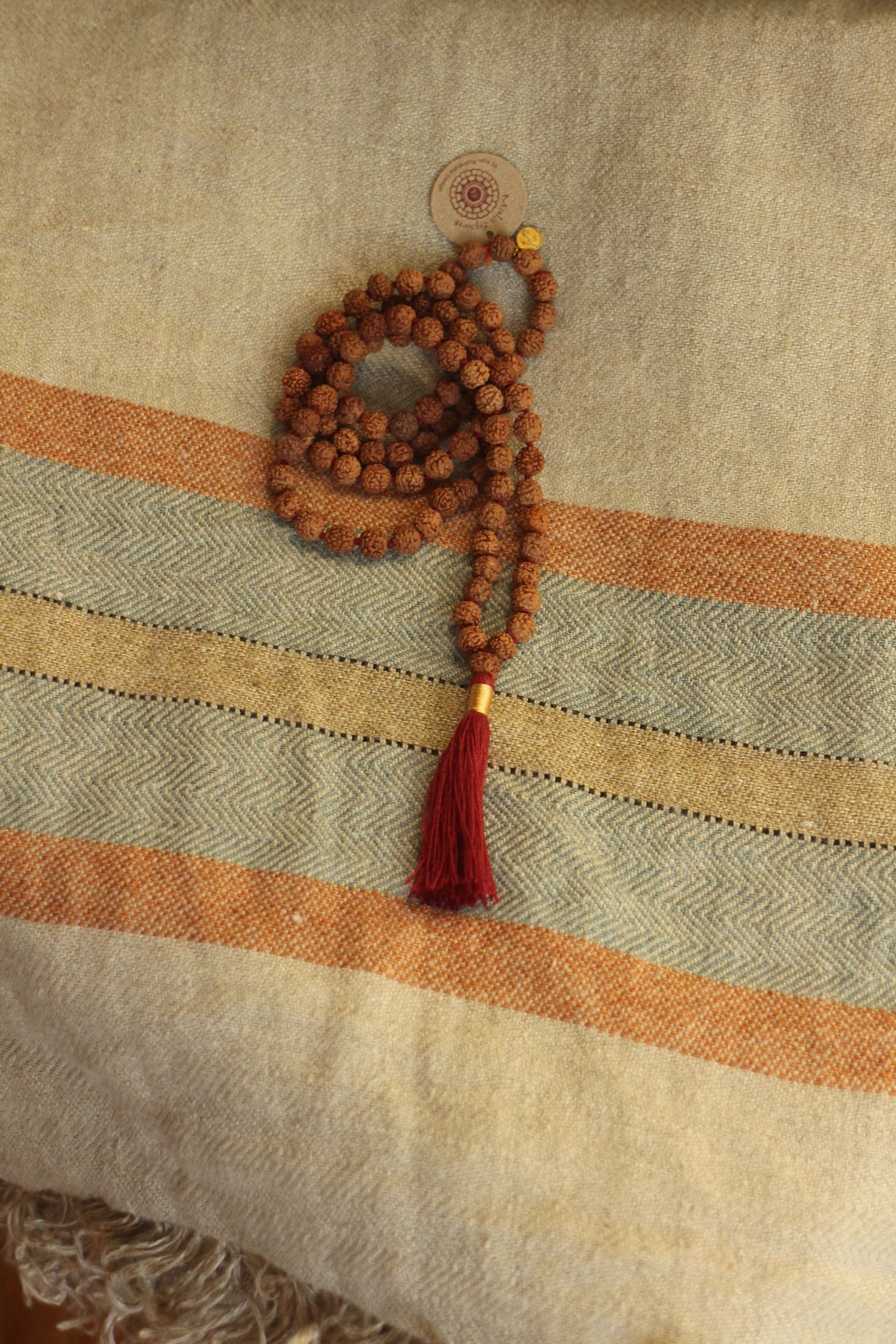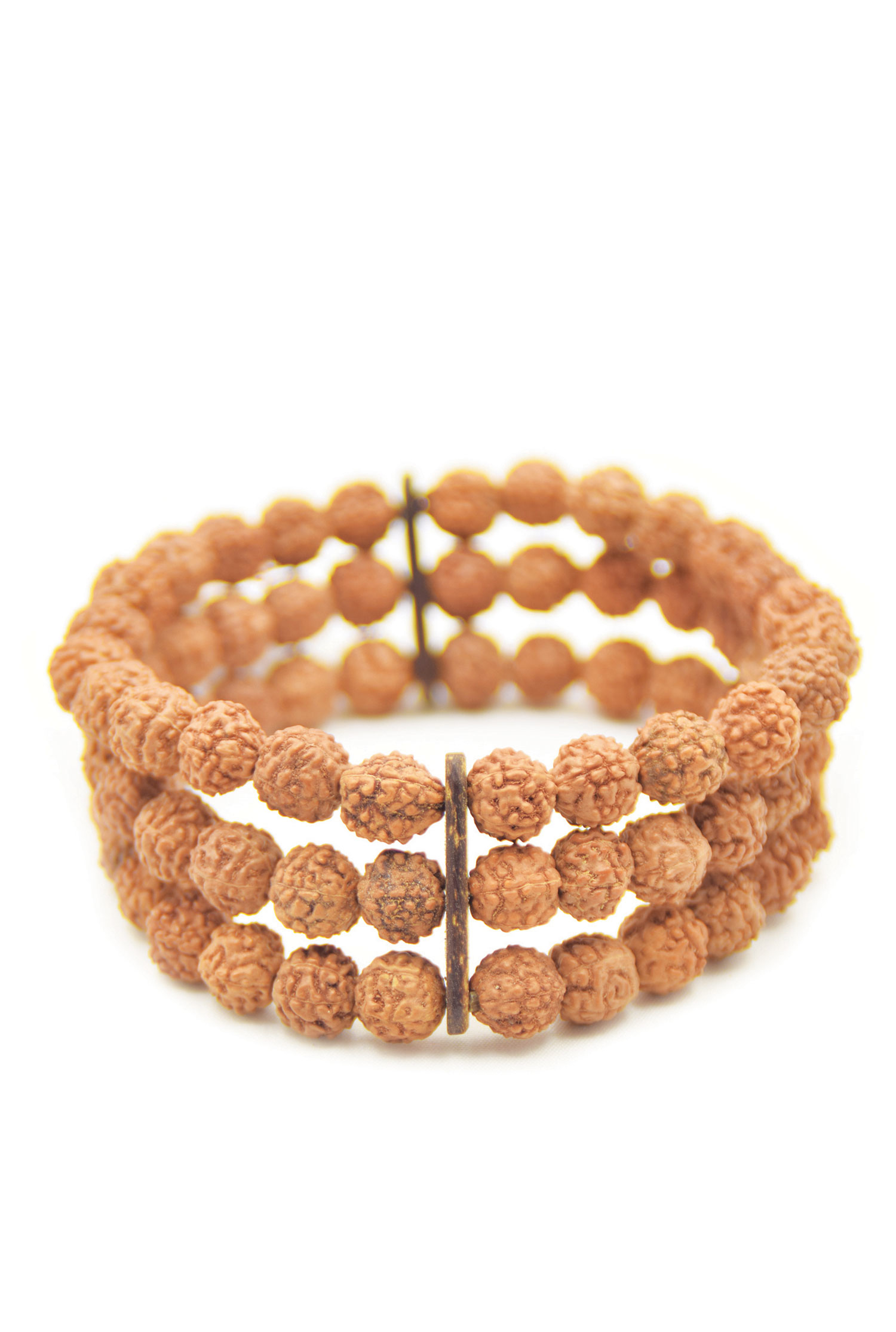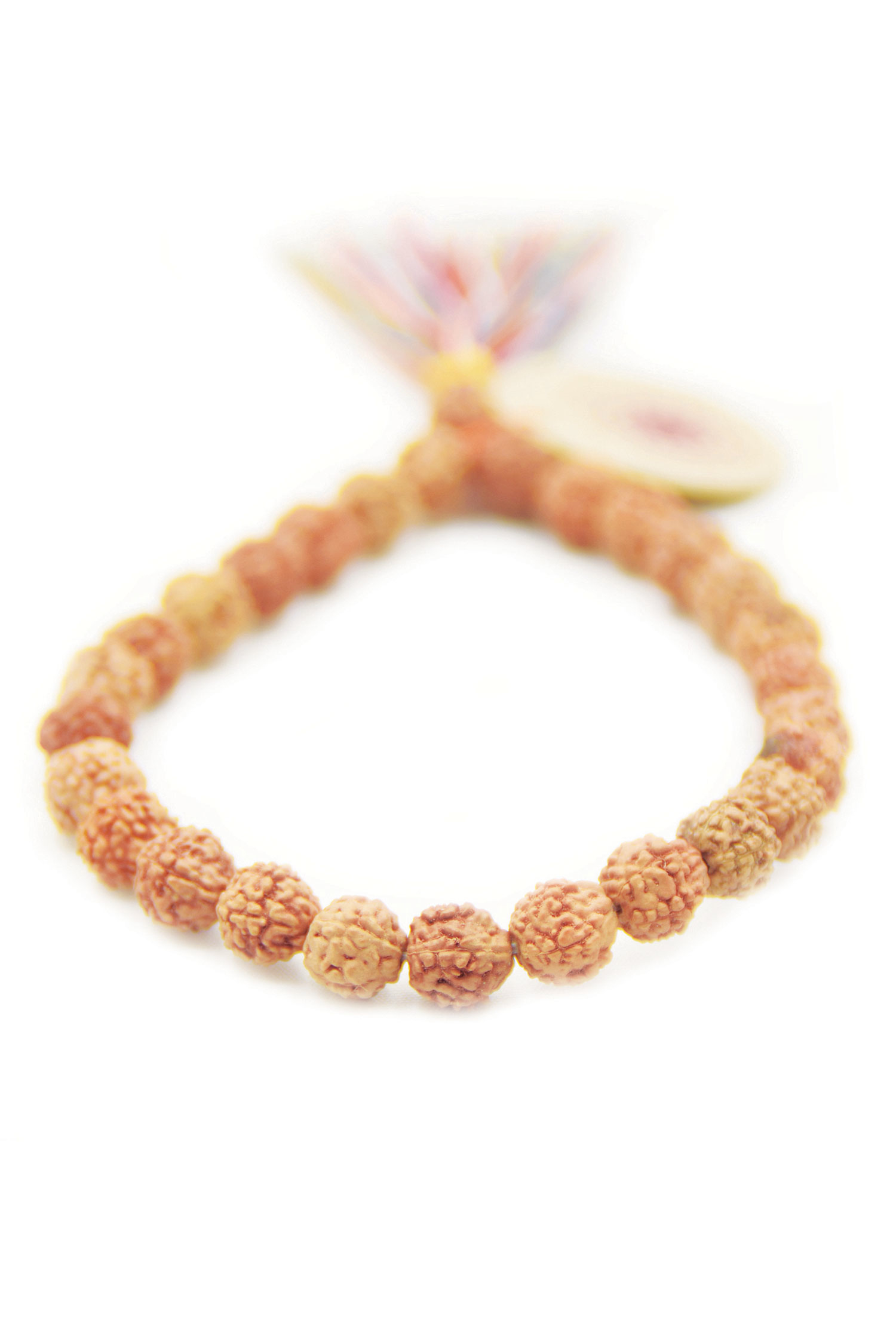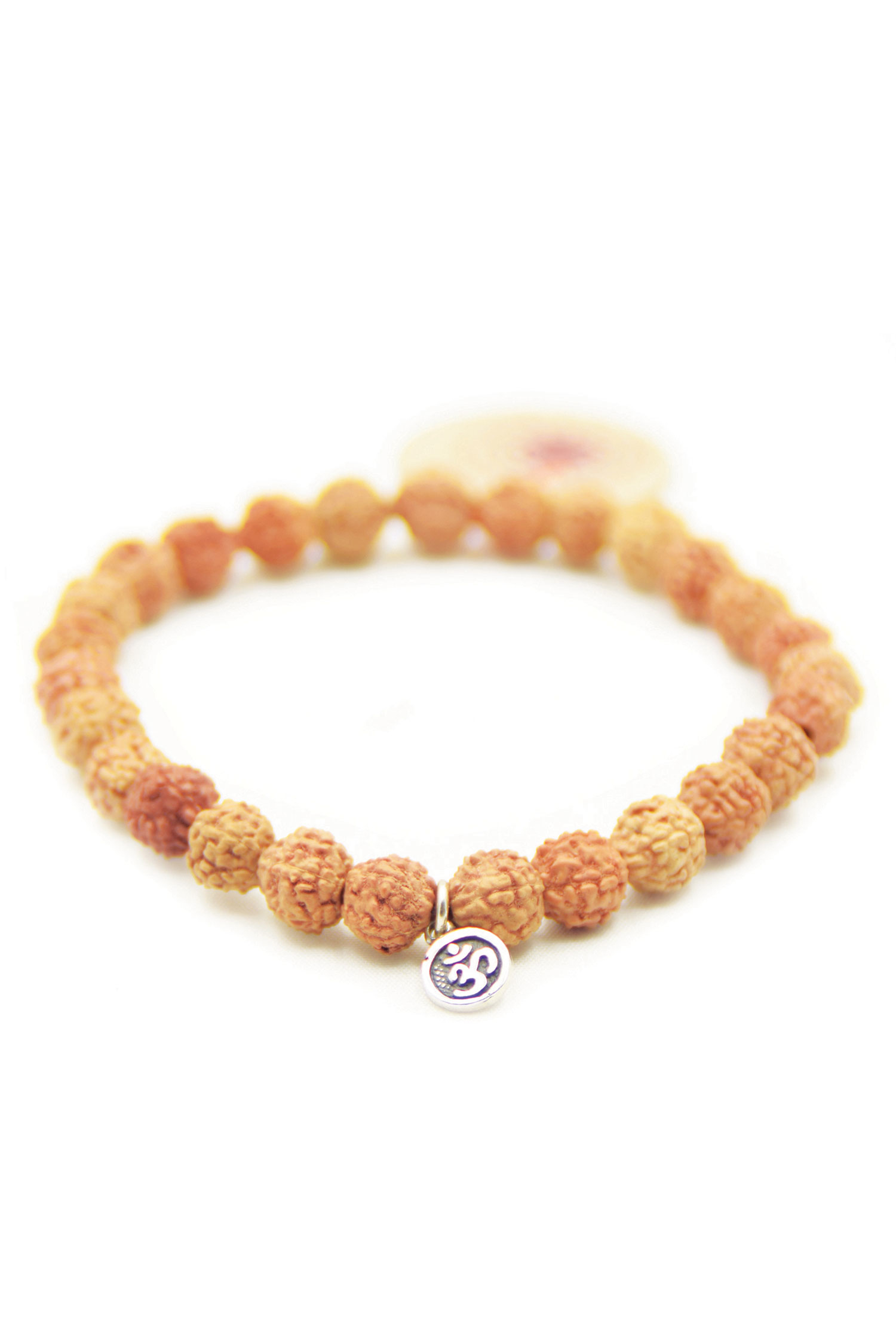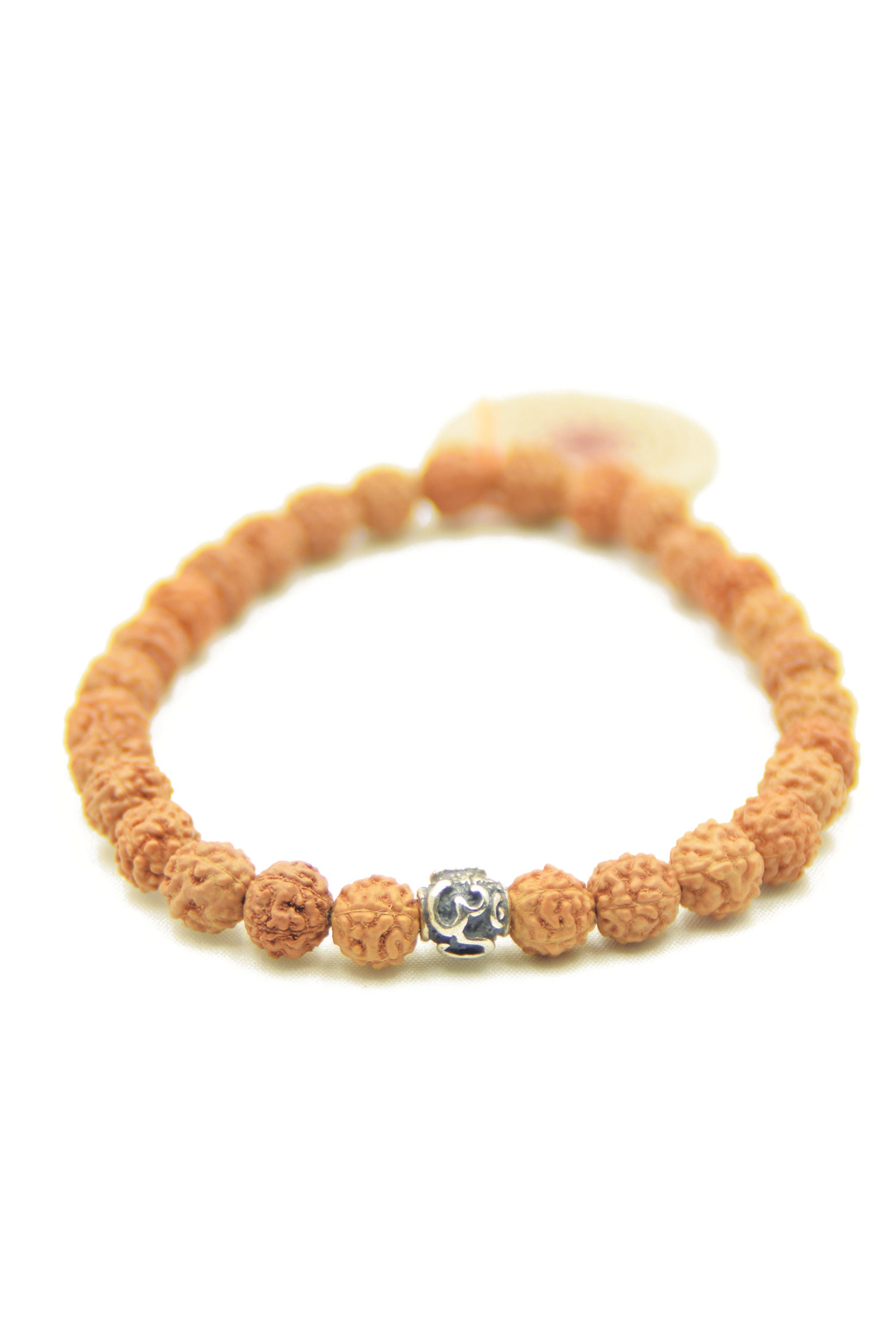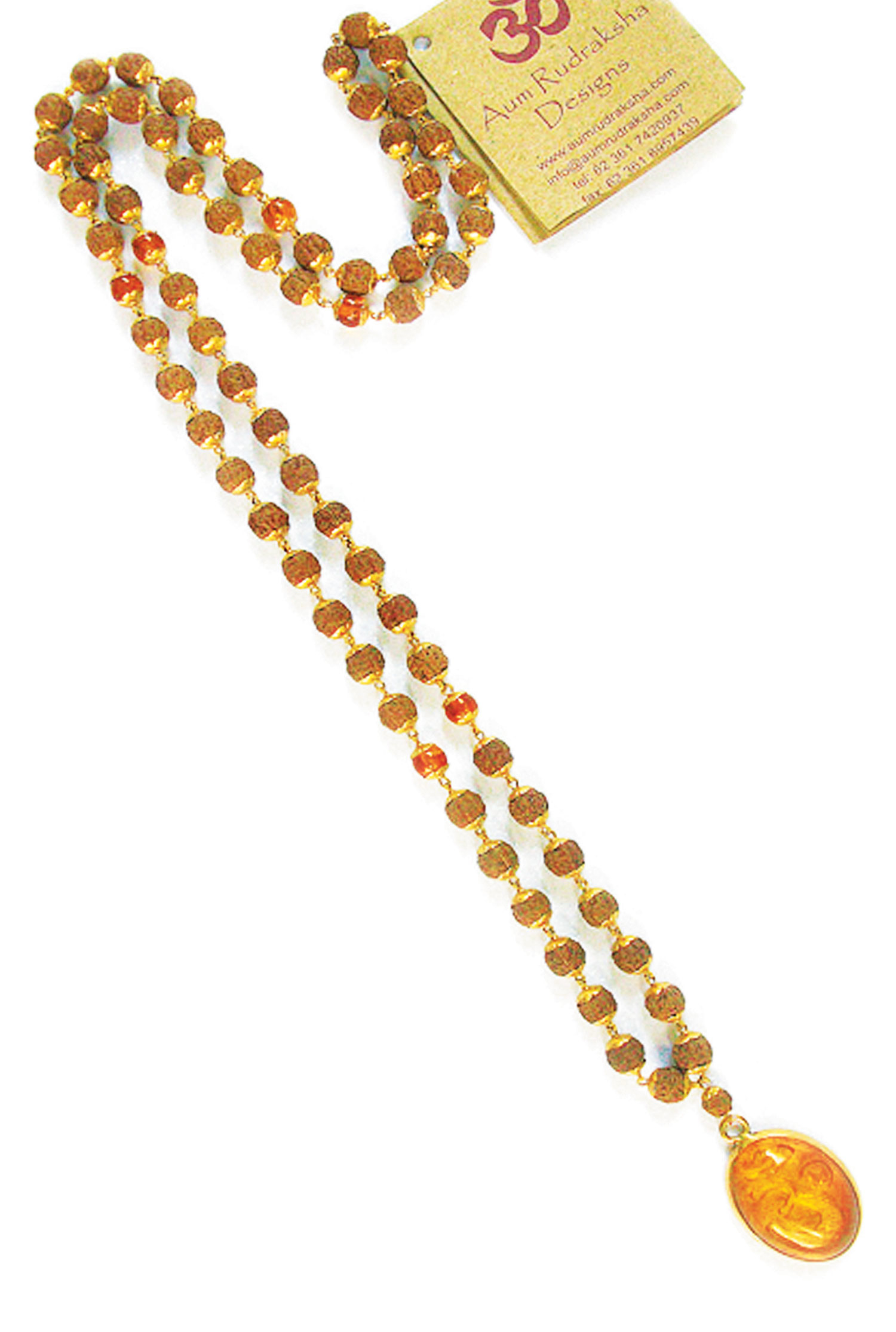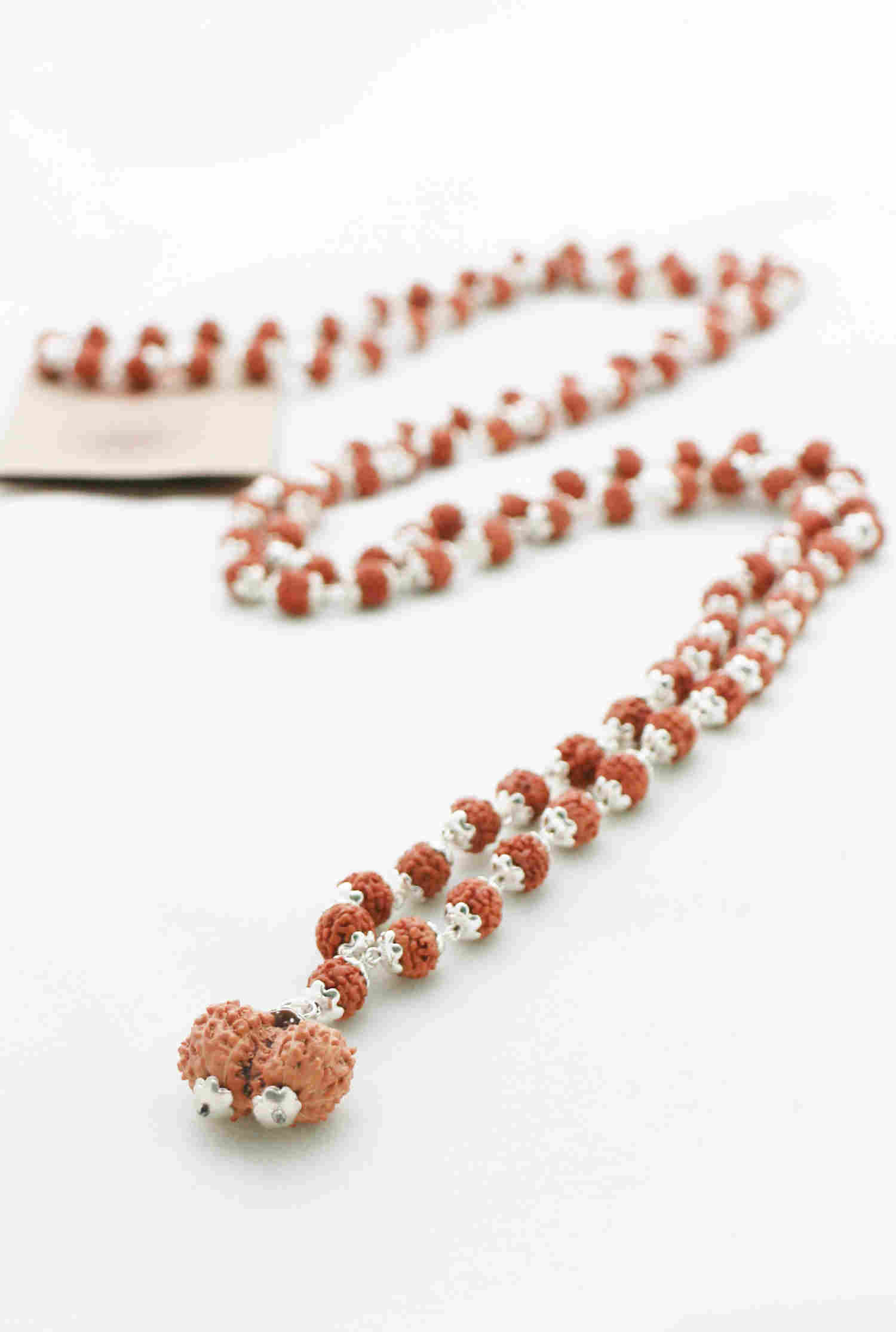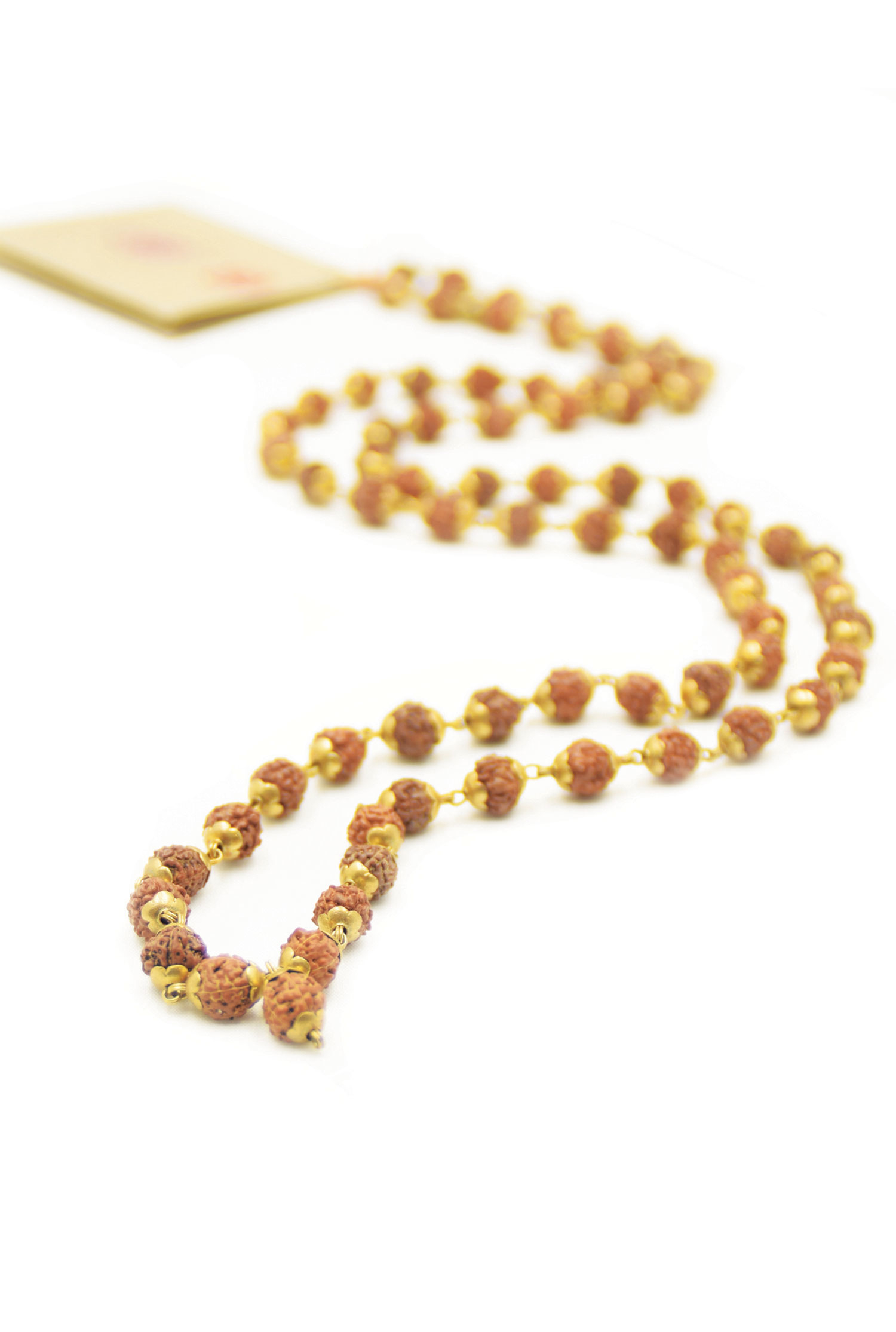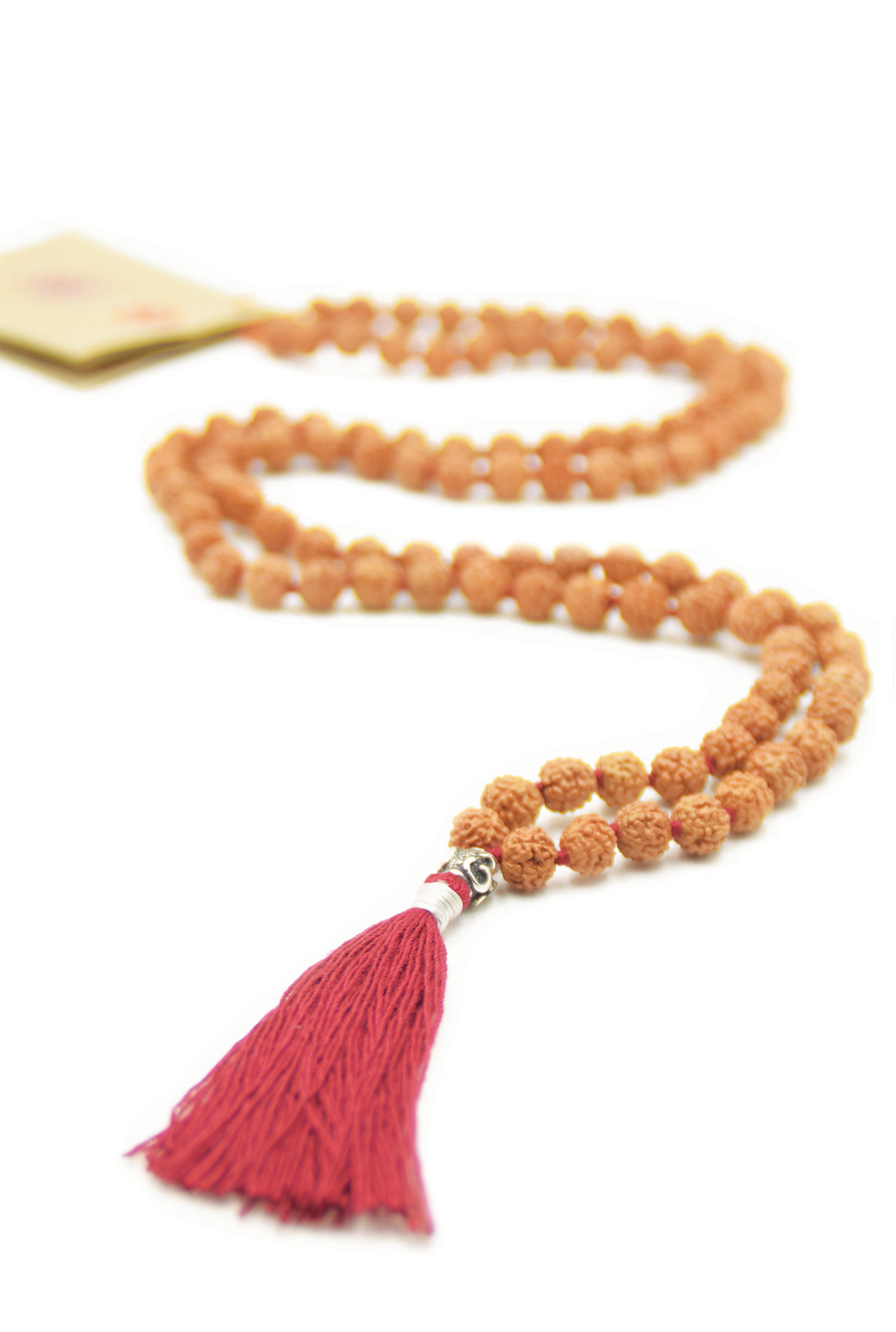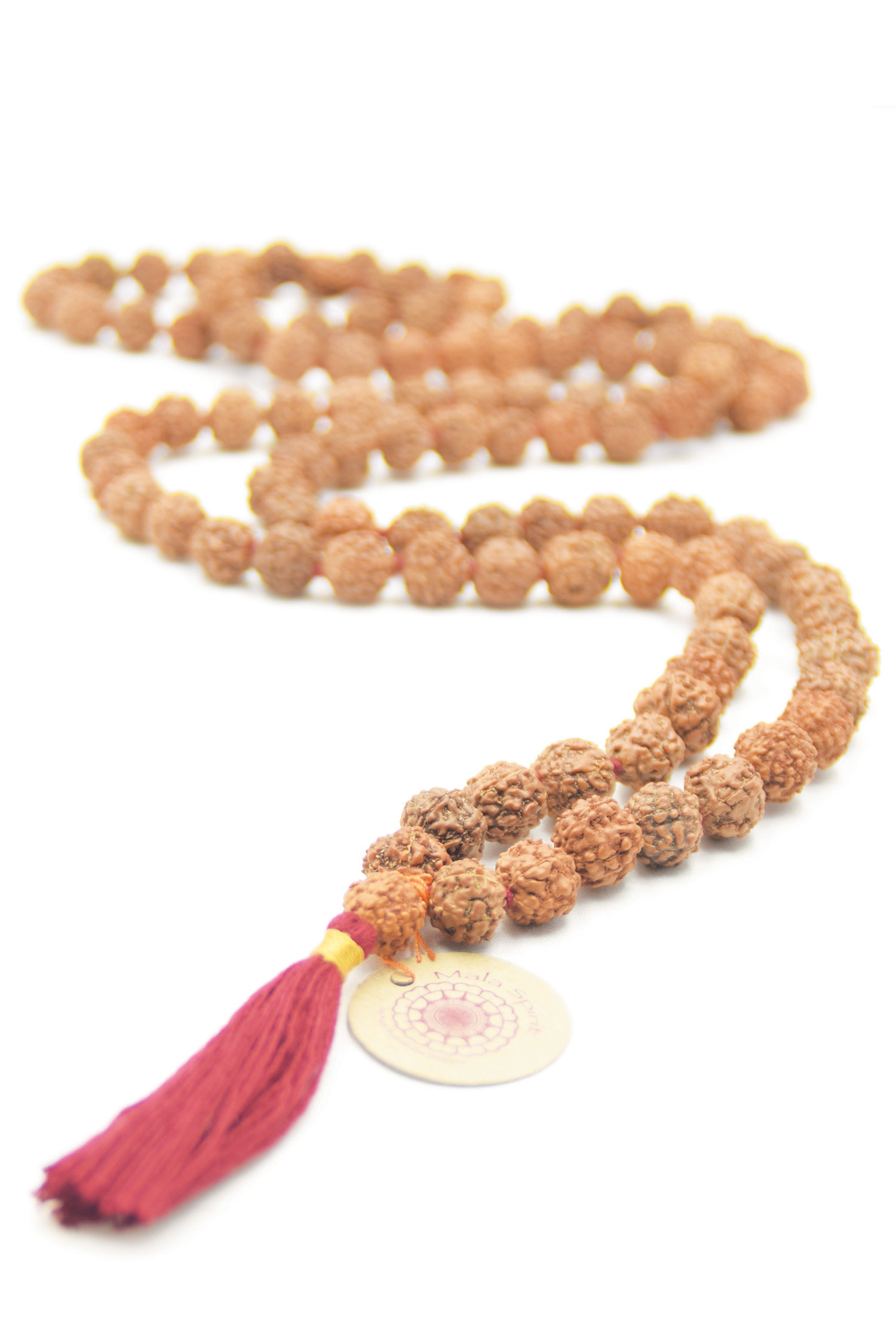
The mystical properties of rudraksha mala beads have drawn interest across the world. Their quiet strength, full of compassion and love, reaches beyond the boundaries we humans have drawn — between religions, between nationalities.
Rudraksha has been known and used since time immemorial. Its origin is traced to Lord Shiva, one of the three principal deities of Hinduism, and from the earliest times his images and idols have been shown wearing these beads.
In this guide you will find where rudraksha comes from, how the beads grow and how they are harvested, what the different mukhi mean, and how to wear, use and care for a mala of your own.
What Does the Word Rudraksha Mean?
The name comes from Hindu mythology and is usually translated as the tears of Shiva, or the eyes of Shiva. In Sanskrit, rudra refers to Lord Shiva and aksha means eye — and, by extension, tear. The rudraksha tree is said to have grown from those tears.
The story tells that Lord Shiva sat in meditation for the well-being of all mankind and wept tears of compassion. Where the tears touched the earth they crystallised and became rudraksha. Ever since, the beads have been held sacred and are believed to carry a healing influence for the one who wears them. They are worn for spiritual practice and used in puja and meditation by Hindus and Buddhists alike.
Beyond their use in malas, rudraksha also has a long history as an Ayurvedic remedy, described in the sacred texts — the Shiva Purana and the Rudrakshajabala Upanishad.
The Rudraksha Tree
The rudraksha bead is the stone inside the fruit of Elaeocarpus ganitrus, a tall evergreen of the Elaeocarpaceae family. It grows in the foothills of the Himalayas, in Nepal and India, and across South-East Asia.
The rudraksha we use at Mala Spirit come from sustainable plantations in Bali and Java, Indonesia. They are sustainably harvested, fair trade and ethically produced. The plantations provide a great deal of work for local people: planting the trees, gathering the fruit and making the sacred jewellery. And because a rudraksha tree offers a fresh crop each season, no tree is ever felled to make a mala.
Leaves, Flowers and Fruit
The leaves begin light green, deepen to a rich dark green as they mature, then turn yellowish red before greying and falling. This cycle continues somewhere on the tree throughout the year, so a rudraksha is never quite bare.
On Bali, flowering takes place in mid-November, when bunches of small white flowers emerge from the old leaf axils. However, this varies from place to place. The flowers add greatly to the beauty of the tree and carry a mild scent. Each bunch of flowers is smaller than the leaves around it.
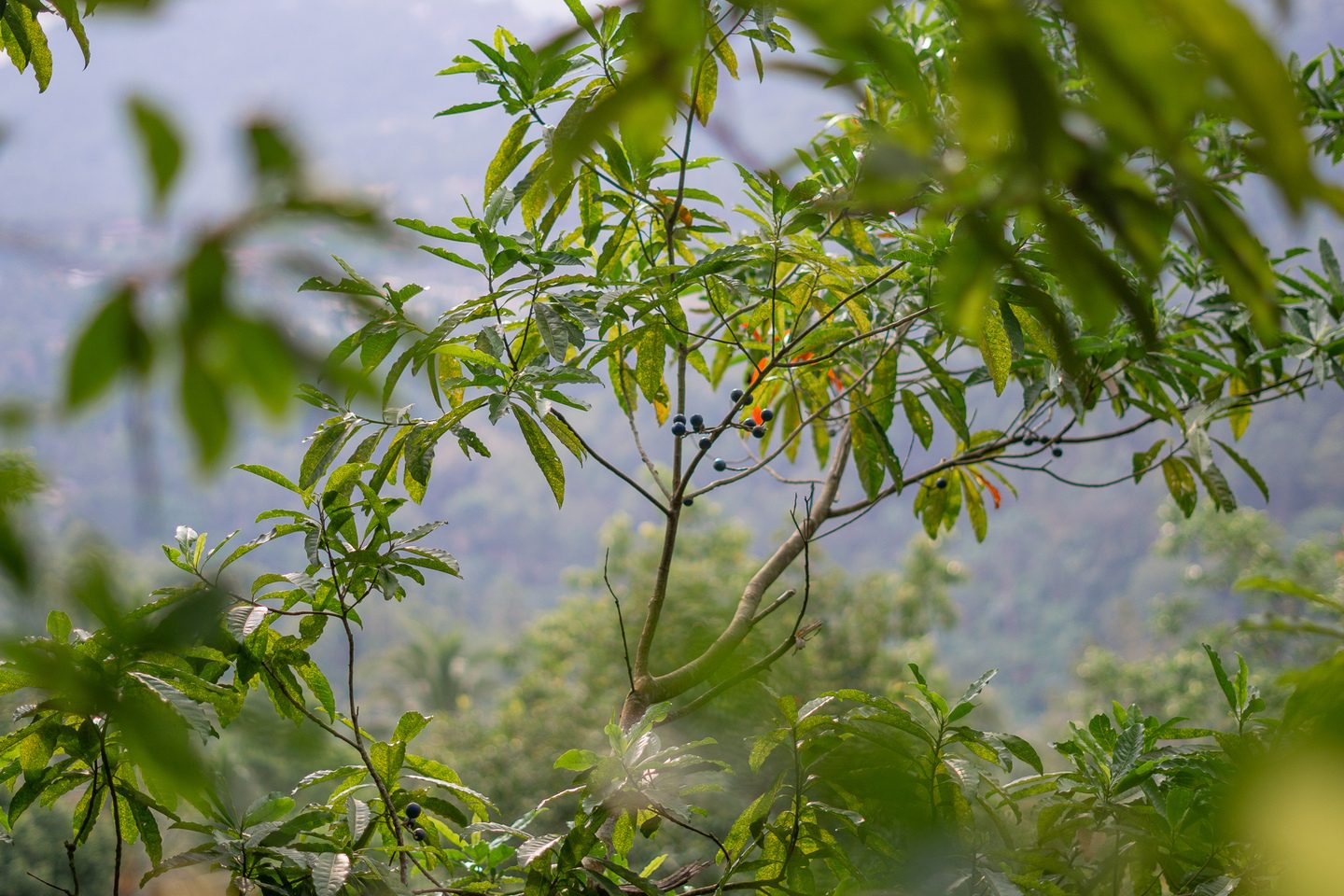
About a month after flowering the first fruits appear. A tree begins to bear fruit three to four years from germination. The fruits vary considerably in size according to where the tree grows: the Nepalese variety produces the largest and the Indonesian variety the smallest. Published figures put Nepalese fruits at roughly 20 to 35 mm across, and Indonesian fruits at roughly 4 to 25 mm.
As the fruit matures its colour shifts from green to blue, then to a deep blue, followed by deep brown and finally black. The fruits are gathered while they are still deep blue — the moment when the tree looks at its most magnificent, the vivid blue set against the dark green leaves.
Why the Smallest Beads Cost the Most
It surprises people, but within a given type the smaller beads are usually the more expensive — and the reason has more to do with labour than with rarity alone.
A small bead has correspondingly fine grooves, and the fruit flesh grows down into every one of them. Cleaning a small bead by hand takes considerably longer than cleaning a large one, and there is no way to hurry it without damaging the bead. Small beads are also simply harder to come by, and a mala needs 108 of them that sit well together in size and shape. Finding that many matched small beads takes time and a great deal of sorting.
One thing worth knowing, because you will read it elsewhere: this holds within a size range and origin rather than across the whole rudraksha world. Among collectors, large Nepalese beads command the highest prices of all. Both facts are true — but they are simply measuring different things.
Rudraksha mala beads are remarkably long-lived. It is said that they can last for as long as eight generations.
Inside the Bead: What Mukhi Means
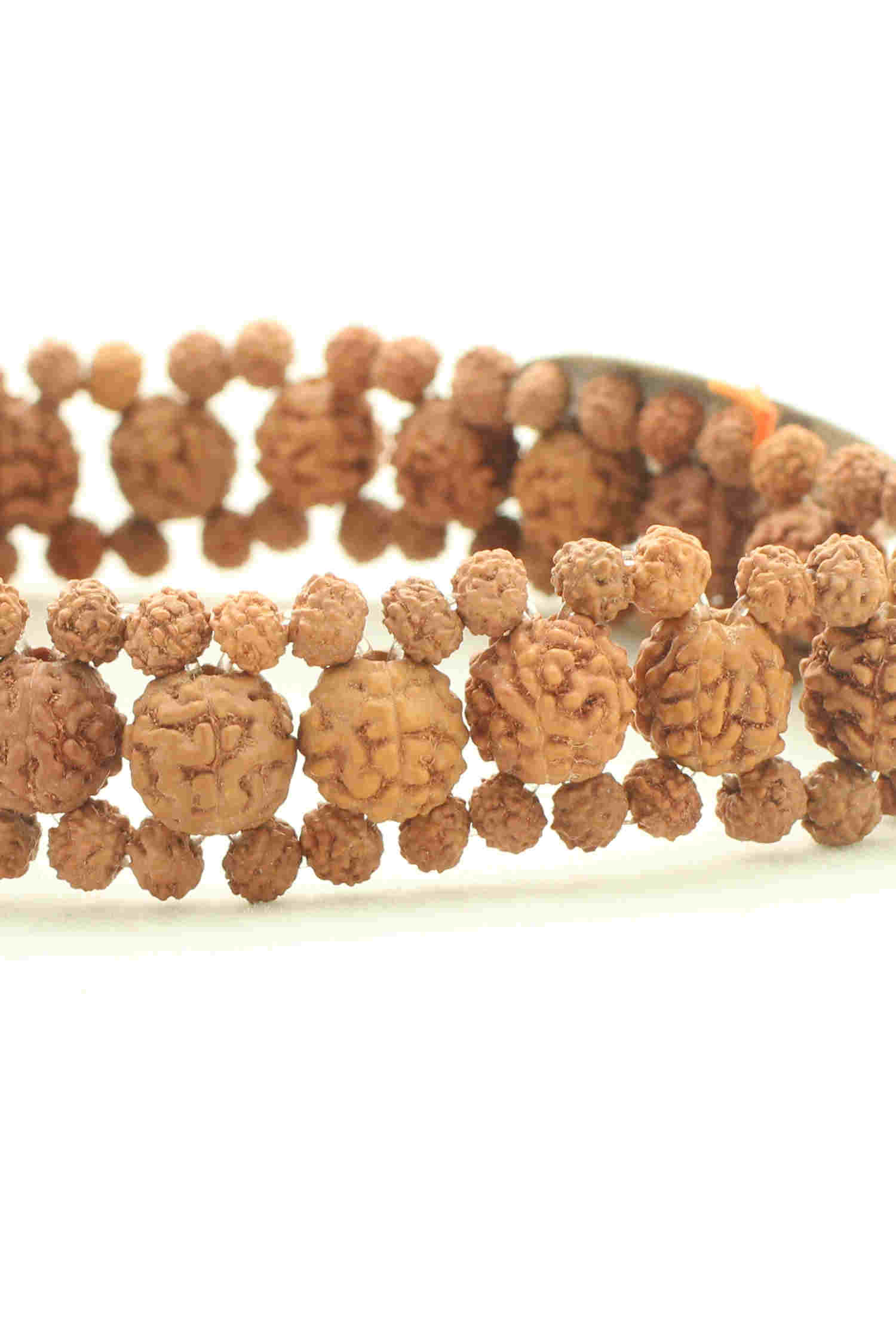
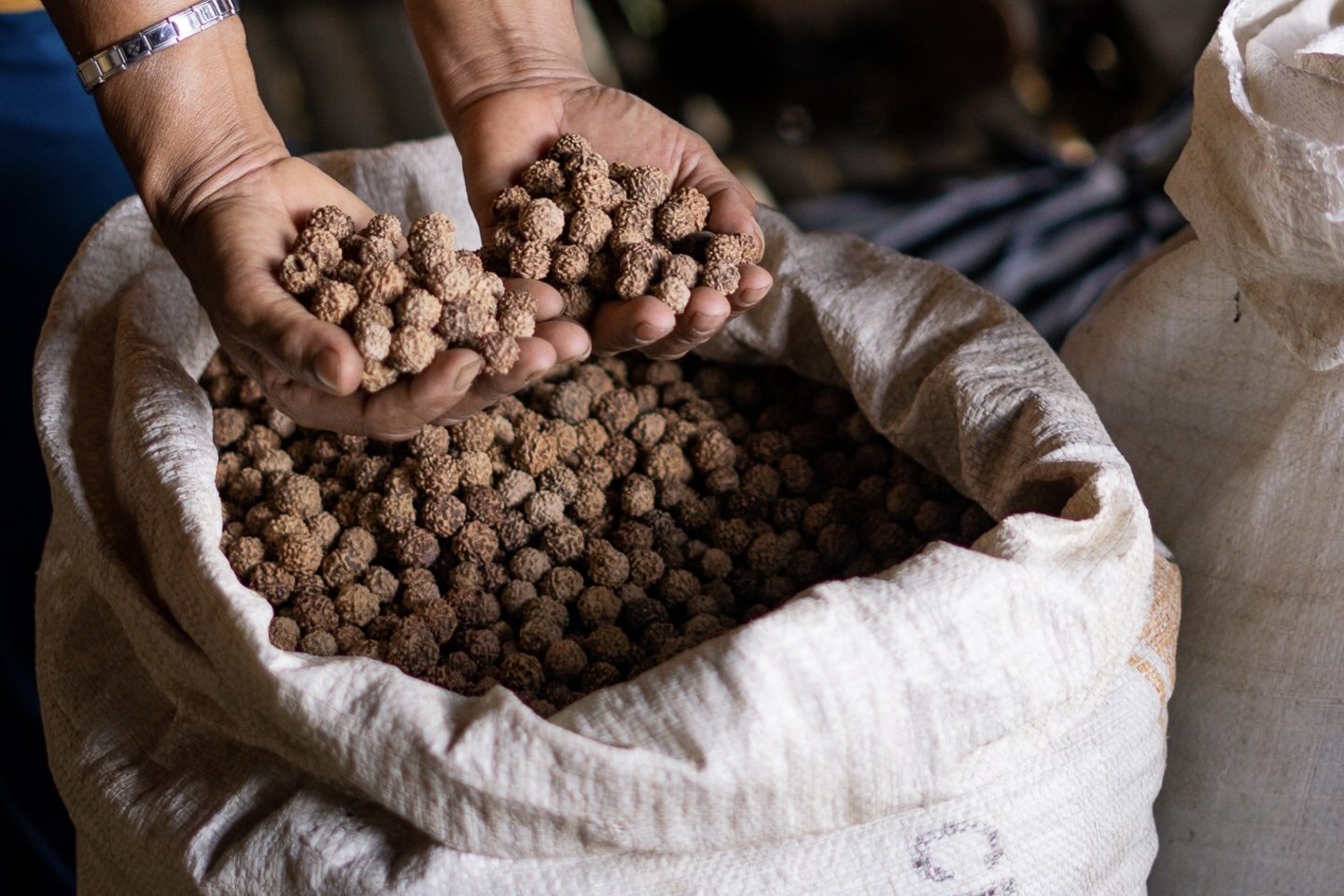
Inside each fruit sits the stony endocarp — the bead itself — attached to the stem at its base. The bead has uneven grooves running down its surface and a long cavity through its centre, running from the point where it was joined to the stem. Seeds sit inside the bead and draw their nourishment through that central cavity.
Every bead is divided into a number of natural segments, known as mukhi (faces) or dahri. You can count them from the outside: the fine lines running from the top of the bead to the bottom mark the divisions. A five mukhi bead, for example, has five clefts, each containing one internal seed.
The number of mukhi generally ranges from 1 to 21, and beads with even more faces have occasionally been found. The sacred texts, in particular the Shiva Purana, describe beads up to 14 mukhi. Each number carries its own significance, with its own properties and associated qualities, which we set out in full on our companion page about the meaning of each mukhi.
Rare and Unusual Rudraksha
A few forms are especially rare. Gaurishankar consists of two beads naturally fused together. Rarer still is Trijuti, also known as Gauri Path, where three beads have grown together — these surface only a handful of times in any given season. Other unusual finds include the elliptical one mukhi rudraksha and the Ganesh rudraksha, which bears a natural trunk-like protrusion.
What the Different Mukhi Mean
Each number of mukhi carries its own significance in the tradition, with its own symbolism, its own associated qualities and, in most cases, its own ruling planet. The one mukhi is held to be an incarnation of Shiva himself. The two mukhi stands for the union of Shiva and Shakti. The five mukhi, the bead we use in all our malas, represents the five aspects of Shiva and is the most widely worn of them all.
All fourteen types of rudraksha are covered in a separate article. Would you like to know more about each mukhi and its properties? Then read on: Rudraksha Mukhi Meaning — All 14 Faces Explained — the full reference, from one mukhi to fourteen, together with the rare Ganesh, Gaurishankar and Trijuti beads.
How Rudraksha Is Harvested
When the fruits reach maturity they are ready to be gathered. The ripe fruits drop from the tree of their own accord and are collected from the ground, so no tree is ever harmed — it simply offers its fruit in its own time.
The beads are then soaked in water, sometimes for several days, until the skin can be peeled away. What follows is patient, intensive work: every bead is cleaned by hand with a brush, because the flesh grows down into all the grooves of the rudraksha. Once cleaned, the beads are laid out to dry, then sorted by size and type, and finally checked for quality.
When the Beads Reach Our Workshop
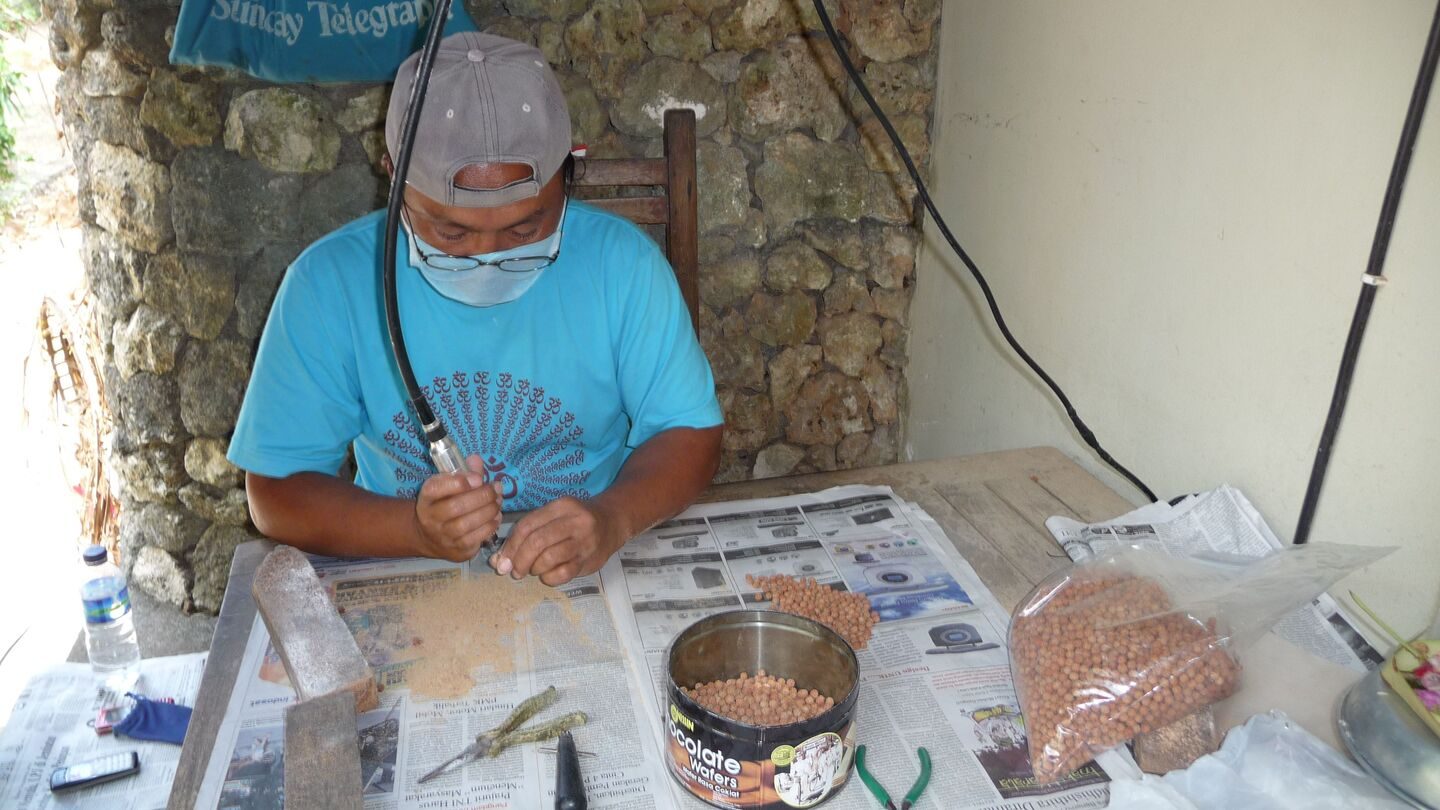
When the rudraksha mala beads arrive at our workshop they are blessed before anything else is done with them. After the blessing, each bead is drilled in the same direction in which it grew, from top to bottom, and it is threaded into the mala the same way round. This matters: it allows the prana — the life energy — to flow freely once the bead is part of the mala.
Fair Trade and How We Work
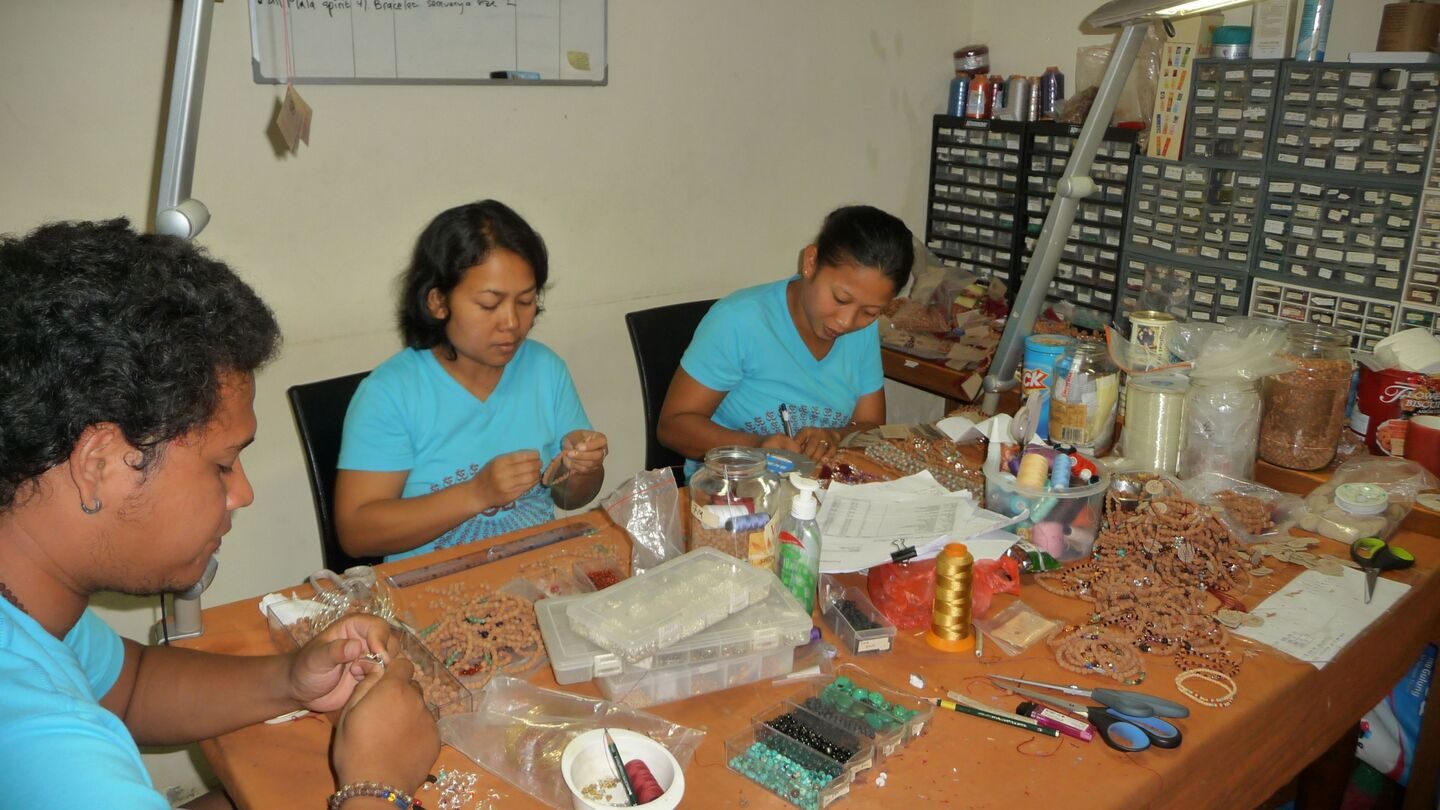
The people who work with us receive a fair wage and also share in 10% of the profits of Aum, our partner workshop in Bali. Most of those who worked with us in 2011, the year Mala Spirit began, are still with us today. Over the years they have become far more than colleagues — together we have become a community.
The rudraksha beads and gemstones are blessed by the team at Aum before they leave the office in Bali and begin their journey to Europe. Once they arrive at Mala Spirit, they are kept in an energetically clean space and cleansed regularly with incense and sage.
How to Use a Rudraksha Mala
There is no single right way to use a rudraksha mala. Some people wear theirs every day, for protection and blessing, for good fortune, health and well-being, and for their own spiritual growth. Others keep their mala for spiritual practice alone: for meditation, for devotional chanting (kirtan), or for visits to temples and places of pilgrimage, or to gurus, saints and sages.
Why a Mala Has 108 Beads
A traditional mala has 108 beads, together with one larger bead that sits apart from the rest. That separate bead is the guru bead, also known as the meru or sumeru. It is never counted and never passed over: it marks where a round of practice begins and where that round comes to rest.
The tradition offers several explanations for the number 108, and you are free to take whichever speaks to you. There are 108 names of Shiva. The Sanskrit alphabet has 54 letters, each with a masculine and a feminine form, which gives 108. Vedic astrology counts 27 nakshatras, each divided into four padas — again 108. And in Vedic cosmology the distance between the earth and the sun is reckoned at roughly 108 times the sun’s diameter. We go into the structure and symbolism of the mala in far more depth in our article on what a mala is.
Counting Mantras on Your Mala
The most common way to use a mala is to count mantras with it: you hold the mala in your right hand, repeat your chosen mantra, and move on one bead at a time until you arrive back at the guru bead. There is a particular way of holding it, a reason the index finger is never used, and a moment of pause when the round is complete.
A mantra suitable for every rudraksha, whatever its mukhi or type, is Om Namah Shivaya.
The full instructions, together with the gentler ways of using a mala without counting at all, are set out step by step in how to use a mala.
Other Reasons to Wear a Rudraksha Mala
There is also a quieter, everyday value to wearing one. If you find yourself reaching for your mala necklace or bracelet without thinking, that touch becomes a reminder: come back to your breath, come back to awareness. When you lean forward and the mala swings gently in front of you, it offers the same small, soft awakening. For many people it is worn simply as a talisman.
Rudraksha in Ayurveda
Ayurveda, the science of health and longevity, is an ancient system that uses natural medicines, treatments and ways of living to treat illness and to support health, balance and a long life.
Rudraksha has its own place within that system. And it is not only the bead that is used: Ayurvedic practice draws on the whole tree — its leaves, its bark and its fruit as well.
The bead itself is prepared and used in several ways:
- worn directly against the body
- ground into a powder
- reduced to an ash (bhasma) as a decoction
- used as an emulsion
- made into an oil
- soaked in water to make healing water
These are traditional Ayurvedic preparations. They are not a substitute for medical care, and we would not recommend preparing or taking any of them without guidance from a qualified Ayurvedic practitioner.
How to Care for Your Rudraksha Mala
Rudraksha beads are sacred, and awareness and respect are the heart of caring for them. Wash them now and then to remove dust and dirt, and oil them occasionally with a natural oil to preserve them. The oils of your own skin will darken the beads over time as you wear them, and that darkening is exactly what you want to see. It is best to take your jewellery off before you sleep.
When you are not wearing your rudraksha bead or mala, keep it in a pouch and place that pouch somewhere in your home that feels sacred to you. Letting a mala touch the ground is considered disrespectful.
Tradition holds that rudraksha malas and loose beads should not be shared, exchanged or passed from one person to another, since your own energy gathers in the mala and strengthens it over time. For the same reason, it is generally suggested that you do not let others handle your mala — except when it is being blessed by a priest, your guru or a saint.
A mala is best worn without expectation, with devotion and with gladness. Worn in that spirit, it is said, one comes to know something of Shiva.
If you wear your mala to a funeral it should be cleansed afterwards — though the suggestion is not to wear it to such occasions at all. There is more on this in the article How to Use a Mala.
Cleansing and Charging a New Mala
You can wear your mala the moment it arrives. But there is something to be said for greeting it first: setting your intention into the beads, in a small ceremony on a Monday, the day of Shiva. People who begin this way often notice a different energy from the mala, and a connection that builds from the start.
We describe that ceremony in full, along with cleansing under a full moon and everything else your mala needs over the years, in how to take care of a mala.
How to Recognise a Genuine Rudraksha
It would be easier not to write this section. But counterfeit rudraksha is common, and anyone considering their first mala deserves a straight answer about it.
Most fakes fall into a few categories. Ordinary five mukhi beads are carved with extra lines and sold as rare high-mukhi beads. Betel nuts, areca nuts and other seeds and berries are shaped and stained to resemble rudraksha. Bhadraksha, the fruit of a different species, is sold under the rudraksha name. And two halves of separate beads are sometimes glued together to imitate a rare form.
Tests That Circulate Online — and Why They Do Not Work
Search for advice on this and you will meet the same three tests over and over. None of them is reliable, and it is worth knowing why before you place your trust in one.
The water test. The claim is that a genuine bead sinks and a fake floats. In practice a wooden fake can simply be weighted, and a genuine bead’s buoyancy varies with how dry it is. The test tells you about density, not authenticity.
The copper coin test. The claim is that a real bead placed between two copper coins will rotate. A modified bead passes this just as readily as an untouched one, and the movement has more to do with the shape of the bead than its origin.
The milk test. The claim is that milk stays fresh longer in the presence of a genuine bead. Milk turns according to temperature and the bacteria already in it. There is nothing here to measure.
What Actually Tells You Something
An X-ray or CT scan. This is the only conclusive method. A genuine bead contains internal seed compartments, and their number matches the mukhi visible on the outside — a five mukhi bead holds five seeds. A carved fake shows the wrong count, or none at all. Reputable dealers in high-mukhi beads provide a scan as a matter of course. The images still need reading by someone who knows what they are looking at.
The mukhi lines themselves. Natural lines run continuously from the top of the bead to the bottom and follow the bead’s own contours, wandering slightly as they go. Carved lines are too regular, too evenly spaced, and cut across the natural grooves rather than following them. Once you have seen the difference it is hard to unsee.
Where the bead came from. This is the one that matters most, and the one no test can replace. A seller who can tell you which plantation their beads grew on, who harvested them and how they reached you is giving you something a laboratory cannot: a chain you can follow. A seller who cannot answer those questions is asking you to take a great deal on trust.
Why We Do Not Test Our Own Beads
At Mala Spirit this question settles itself before it can be asked. Some of the plantations our rudraksha grows on belong to the same owners as our workshop in Bali. The rest of our beads come from a plantation in Java that we have worked with since the very beginning, and which the workshop team visits and inspects in person.
That means we know which trees our beads came from, who gathered them from the ground and whose hands cleaned each one. There is no point in the chain at which a bead of unknown origin could enter it. So we do not test our rudraksha for authenticity — there is nothing to test for.
There are still two visual checks, though. Every bead is looked over once as it is drilled, and again as it is strung into the mala.
We are aware that this is not something we can prove to you in a photograph, and we would not ask you to take it purely on faith. It is precisely why we write so openly about where the beads grow, who harvests them and how they travel to you. Provenance is not a detail of our marketing. It is the entire answer to the question this section asks.
Rudraksha Mala Beads at Mala Spirit
The rudraksha we use in our malas are five mukhi beads, the bead that represents Lord Shiva. It is the most popular of all rudraksha and the one traditionally worn around the neck. Every mala is made in Bali by the same team we have worked with since 2011, from beads that are sustainably harvested, fair trade and blessed before they begin their journey to you.
You can see them in the Sacred collection, where the rudraksha stands in its purest form, or combined with gemstones across the rest of our malas.
Curious what is available right now? Have a look at all our mala necklaces, or browse our mala bracelets.
Frequently Asked Questions About Rudraksha Mala Beads
How many beads does a rudraksha mala have?
A traditional mala has 108 beads plus a larger guru bead, which is not counted. Shorter malas of 54 or 27 beads are halves and quarters of the full round, and are often worn as bracelets. There is more on the structure and symbolism in our article on what a mala is.
Can anyone wear a rudraksha mala?
Yes. Rudraksha is worn by people of many faiths and of none. The tradition places no restriction on who may wear the beads — what matters is the respect and intention you bring to them.
Can I wear my rudraksha mala every day?
You can. Many people wear theirs continuously, taking it off to sleep and when bathing. Others keep their mala for meditation and spiritual practice only. Both are valid.
Will my rudraksha beads change colour?
Yes, and this is a good sign. The natural oils of your skin gradually darken the beads as you wear them, giving each mala a unique patina.
Which mukhi should I choose?
For most people the five mukhi is the answer, and it is the bead we use in all our malas: it is regarded in the tradition as suitable for anyone. The higher mukhi are chosen for particular circumstances, usually on the advice of a Vedic astrologer. All fourteen are described in rudraksha mukhi meaning.
How do I know my rudraksha is genuine?
The popular home tests — floating a bead in water, spinning it between copper coins, leaving it in milk — do not work. What does work is an X-ray showing that the internal seed compartments match the mukhi you can count on the outside, a close look at whether the mukhi lines are natural or carved, and above all a seller who can tell you exactly where the bead came from. There is a fuller explanation earlier in this article.